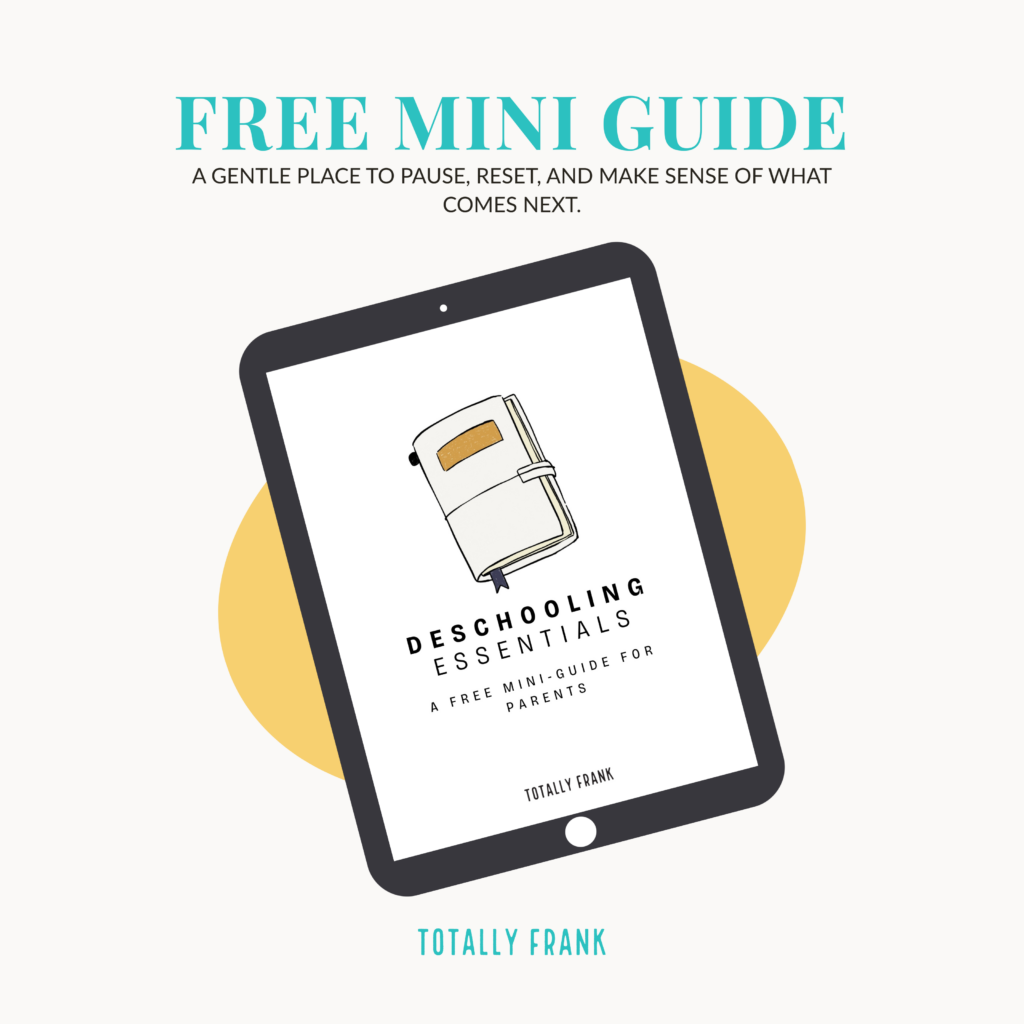
A Free Mini Guide for Parents
A gentle place to pause, reset, and make sense of what comes next.
Homeschooling doesn’t have to start with structure – it starts with space. If school has left your child anxious, burnt out, or resistant to learning, this mini guide will help you both exhale.
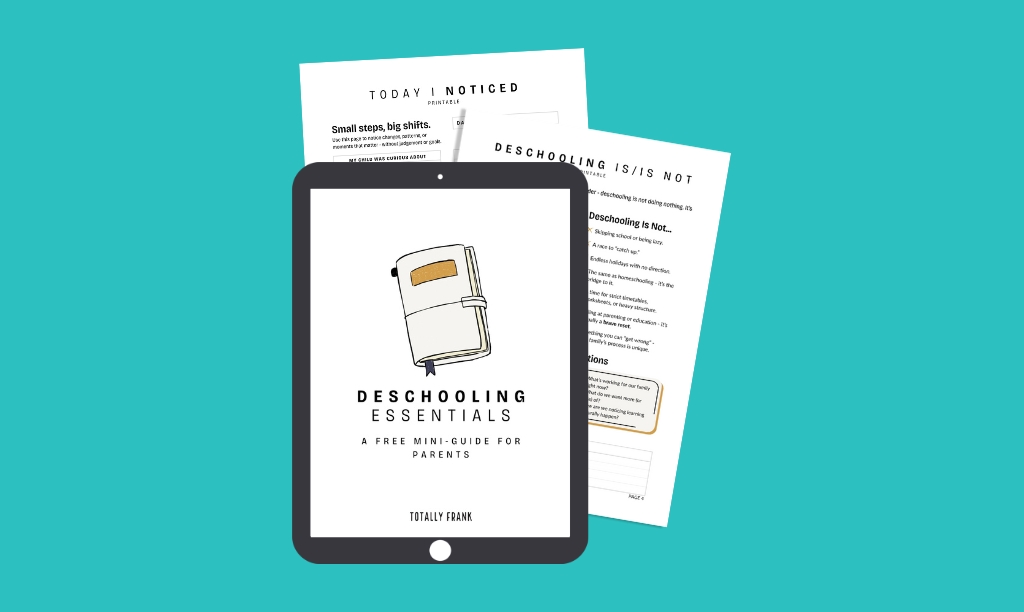
Deschooling Essentials is a free, printable resource designed to support families as they step away from school pressure – without diving into workbooks or timetables.
You’ll learn how to rest, reconnect, and recognise that learning is already happening every day.
What’s Inside the Free Guide
When you’re stepping away from traditional schooling, the first stage is about recovery – not routines.
This mini guide gives you the tools and reassurance to slow down and observe before you plan.
Here’s what’s inside:
Each section includes short, guided prompts – no pressure, just gentle support toward calmer days.
Why Deschooling Matters
For many neurodivergent families, school isn’t just stressful – it’s exhausting. Autistic, ADHD, PDA, and anxious children often need time to recover before they can thrive in a home learning environment.
Deschooling gives you both space to:
Think of it as a reset – a season of rest that supports whatever comes next.
Ready to make your first days calmer?
Who It’s For
This mini guide was designed for parents who want to homeschool differently – gently, without guilt or overwhelm.
It’s perfect if you:
You don’t need to have it all figured out – this guide helps you take that first step with reassurance and structure.
This guide is also helpful for families who’ve already started homeschooling and are wondering why things still feel hard.
A Note From Sophie
I know what it’s like to question everything – Am I doing enough? Should we start lessons? What if I fail?
Hi, I’m Sophie – a homeschooling mum of two autistic and ADHD boys, and creator of Totally Frank.
I made this mini guide because the early days of homeschooling can feel confusing and isolating.
But I also know that real learning begins when you slow down and reconnect.
Deschooling Essentials is a small but powerful start – one that gives you permission to rest, notice, and rebuild confidence before anything else.
Start with calm – not urgency.
FAQ
Q: What is deschooling?
A: Deschooling is the transition period between leaving traditional school and beginning homeschooling. It’s a time for rest, recovery, and reconnection.
Q: How long does deschooling take?
A: There’s no fixed timeline. Deschooling looks different for every child and family, especially for neurodivergent kids. Some families need weeks, others months – and many move in and out of deschooling as needed.