Interest led learning is a calm way to build a flexible curriculum around what your child already cares about, so learning feels safer and more doable. Instead of pushing through refusals, you’ll create gentle anchors and real-world pathways that support ADHD and PDA needs – while still covering the basics over time.
A flexible homeschool approach that works with your child’s brain
If you’re trying to homeschool without constant power struggles, interest led learning can be the exhale.
If that’s you, there’s a good chance your homeschool plans look great on paper… and fall apart the moment your child feels pressured.
Maybe worksheets trigger shutdown. Maybe “just do this quick thing” turns into a stand-off. Maybe your child can hyperfocus for hours on one passion, but the second it smells like school, they’re out. And now you’re stuck carrying that heavy loop of worry: What if I’m not doing enough? What if I’m doing it wrong?
Interest led learning is a calm, practical way to build learning around what your child already cares about – so access comes first. It’s not “no learning”. It’s learning that’s more likely to land because it respects energy, sensory load, demand load, and executive function. And yes, it can be ADHD- and PDA-friendly without turning your home into chaos.
In our home, the biggest shift came when I stopped trying to “get them to do” learning – and started designing days where curiosity could show up without being invited. I’ve learned the hard way that for PDA brains, invitation can kill interest… but intrigue wakes it up.
On this page, I’ll show you what interest led homeschooling actually means, how a flexible homeschool curriculum works in real life, and how to guide learning without pushing. You’ll get a simple step-by-step framework, ADHD and PDA-friendly adjustments, and reassurance about the basics (yes – maths and reading still count, and they don’t need to be worksheets).
Quick Summary (so you can breathe):
If You’re Searching “Interest Led Learning”, You’re Probably Tired
Tired of the worksheets that get refused. Tired of the “we should be doing more” feeling. Tired of watching your child shut down the moment learning starts to look like school.
If that’s you, here’s the reframe that usually changes everything:
Motivation isn’t the problem. Access is.
Access is about:
When access is blocked, it can look like “refusing” – but it’s often overload.
What Is Interest Led Learning?
Interest led learning (simple definition) is basically:
So instead of “now we do writing”, it becomes:
Same learning muscles. Different entry door.
Interest led learning vs “interest only”
Interest led learning isn’t “do whatever all day”. It’s guided. You’re still doing the parent job:
What Is a Flexible Curriculum?
A flexible curriculum is…
A plan that still has skills + knowledge goals, but uses flexible pathways.
It usually means:
A 2024 meta-analysis of homeschooling studies linked home education with higher learning motivation and engagement than conventional schooling in the included studies, commonly connected to flexibility, individualised pacing, and closer adult support.
A flexible curriculum is not…
Flexible doesn’t mean structure-free. It means structure that adapts to a nervous system.
Why Interest Led Homeschooling Works So Well for Neurodivergent Kids
This is the “parents exhale” part.
Interest led homeschooling often works because it reduces the exact things that make learning hard for neurodivergent kids.
It lowers power struggles
Less direct demand = less resistance.
It supports regulation
Learning starts where your child feels safer, not where the curriculum says they “should”.
It supports executive function
Fewer switches. Clearer purpose. Less “where do I start?” overload.
This aligns with what we know about executive function: external supports (visual steps, prompts, templates) can reduce cognitive load and make tasks more doable.
It can deepen engagement
When the interest is high, many kids stay with something longer – and that’s where skill-building sneaks in.
It builds confidence
Competence grows when kids can succeed in a context that already makes sense to them.
And if you want the simple motivation frame (no lecture, promise):
Research synthesis on self-determination theory consistently links stronger engagement and wellbeing with environments that support autonomy (choice), competence (I can do this), and connection (I’m not alone in it).
The “Bridge to Autonomy” (How Parents Guide Without Controlling)
Your job isn’t to push – it’s to design the environment.
You’re the architect, not the drill sergeant.
The autonomy ladder (a simple progression)
Most neurodivergent kids move through autonomy in stages:
co-regulation → shared tasks → choices → self-directed bursts → independent projects
Autonomy isn’t something you demand. It’s something you build, through safety and repetition.
How to Build a Flexible Curriculum Around Interests (Step-by-Step)
Step 1 – Notice the “sticky interests”
What do they return to? What do they watch, build, collect, research, talk about, or recreate again and again? Sticky interests are curriculum gold.
Step 2 – Choose 1–2 “home base” interests at a time
Try not to plan ten topics at once. Let an interest run long enough to deepen. You can always pivot later.
Step 3 – Map the basics inside the interest (without forcing it)
Use this as a gentle mapping tool (not a checklist):
| Learning Area | What it can look like inside an interest |
|---|---|
| Reading / Viewing | manuals, subtitles, articles, diagrams, documentaries, info cards |
| Writing / Creating | captions, labels, comics, dictation, voice notes, scripts, posters |
| Maths in Real Life | measuring, budgeting, timing, mapping, comparing, graphing |
| Science / Systems | how it works, cause/effect, materials, forces, ecosystems |
| HSIE / History / Geography | timelines, maps, cultures, inventions, local community links |
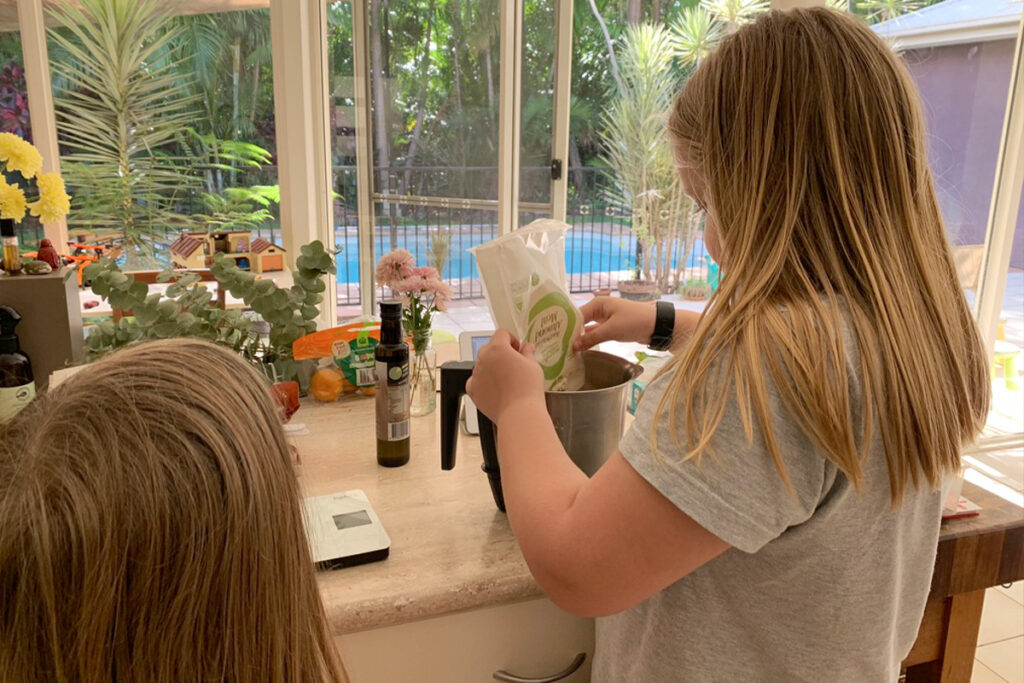
| Life Skills | cooking, organising kits, planning, collaboration, repair jobs |
And if your child resists anything that looks like “writing”, that’s okay. Communication still counts: voice notes, photos with captions, comic strips, labels, narration.

Step 4 – Pick 3 “learning anchors” for the week
Anchors give shape without timetables.
Examples:
Step 5 – Gather a small set of resources
Keep it simple and usable.
Step 6 – Keep the plan breathable (menu, not checklist)
Try:
Many effective learners adjust as they go – planning, monitoring, and adapting instead of following a perfect linear plan. That’s a good fit for neurodivergent homeschooling too.
Interest Based Learning Activities (Examples Without Turning Into a Giant List)
Just enough to spark ideas – not overwhelm you.
ADHD & PDA-Friendly Adjustments (Keep the Interest Without Triggering Pressure)
For ADHD
For PDA
PDA-friendly learning often needs openings, not orders.
And in many families: invitation kills interest, but intrigue wakes it up.
So instead of “Do you want to…?”, you might:
The PDA Society (UK) also talks about using indirect language – observations and modelling rather than direct instructions. Their website is well worth a read.
PDA-friendly scripts (4–6 options)
(Notice how none of these corner them.)
“But What About the Basics?”
This is the fear that sits under everything.
Here’s the truth: the basics don’t require daily worksheets to grow.
Think spiral learning:
Minimum viable learning (a calm baseline)
If your week includes most of these over time, you’re doing real learning:
How to Document Learning (Without Killing the Joy)
You don’t need your child performing reflection on demand.
If reflection is too much in the moment, do it later yourself – or keep it to simple captions.
The Education Endowment Foundation’s Guidance Report on Metacognition and Self-Regulated Learning emphasises teaching “thinking skills” inside real tasks, not as a separate “learning to learn” lesson.
A simple loop you can use at home is: plan – monitor – evaluate (think before – during – after):
Before: What’s the plan? What do you already know?
During: Is this working – or do we need to change approach?
After: What helped? What didn’t? What will we try next time?
Keep it nervous-system-first: if your child is stressed, reflection can wait. Use scaffolds like checklists, templates, and worked examples to reduce overload and make the task feel doable.
Common Sticking Points (Troubleshooting)
“My child has no interests”
Sometimes interests are there, but buried under burnout. Try:
Script: “I’m going to put a few things out and see what grabs you. No pressure.”
“Interests change every 3 days”
That can be ADHD novelty-seeking or nervous system protection.
Script: “We can switch topics. We’re still building skills.”
“They only want screens”
Script: “I’m happy with screens today. Let’s just add one tiny ‘create’ piece after.”
“They refuse anything that looks educational”
That’s information.
Script: “I’m going to mess around with this. You can watch if you want.”
“I’m scared I’m not doing enough”
You’re not alone.
In an in-depth homeschooling meta-analysis, flexibility and individualised pacing were commonly connected to motivation and engagement. That matters.
And your child’s safety and access matter too.
Script: “We’re building learning that our nervous system can handle.”
Frequently Asked Questions
What is interest led learning?
Interest led learning is a way of homeschooling where your child’s interests become the starting point, and you build skills and knowledge inside those interests using gentle structure and real-world tasks.
Is interest led homeschooling the same as unschooling?
Not always. Some families blend them. Interest led homeschooling can still include anchors, guidance, and skill goals – just without rigid sequencing or school-shaped pressure.
What is a flexible curriculum?
A flexible curriculum is a plan with learning goals, but flexible pathways. It prioritises pacing, access, and fewer forced transitions over strict schedules.
How do I create a flexible homeschool curriculum?
Start with 1–2 sticky interests, map the basics inside that interest, choose 3 weekly anchors, gather a small set of resources, and use a menu approach instead of a checklist.
How do I cover maths and reading with interest based learning?
Use real-life maths (measuring, budgeting, mapping, timing) and real reading (manuals, subtitles, articles, diagrams, books, audio). Add light “create” options like captions, labels, comics, or dictation.
What if my child only wants one topic?
That’s often where deep learning happens. Let it run. Spiral back to the basics inside the topic over time (reading, writing/communication, maths, science/systems, history/geography, life skills).
How do I do interest led learning with ADHD?
Use short bursts, body-doubling, externalise steps (templates/checklists), reduce transitions, and follow high-interest windows when they appear.
How do I do interest led learning with PDA?
Use openings not orders. Avoid “invitations” that feel like demands. Start the thing yourself, use indirect language, and let curiosity pull them in.