Moving from deschooling to homeschooling doesn’t need a “start date” or a new timetable. This guide will help you take gentle, low-pressure steps – building a simple rhythm and safe transitions without recreating school at home.
How to start adding rhythm without bringing school pressure back
If you’re googling deschooling to homeschooling, there’s a good chance you’re standing in a very specific doorway. Not the doorway where everything is calm and sorted. The doorway where school pressure has eased a little… but the idea of “starting” anything still feels risky.
Maybe your child is resting more. Maybe you’re seeing small flickers of curiosity again. And still, the moment you add structure, everything spikes – overwhelm, panic, shutdown, anger, tears. So you’re stuck in that awful in-between: you can’t go back to school as it was, but you’re scared of bringing pressure back at home.
Here’s the truth most families only learn by living it:
Moving from deschooling to homeschooling isn’t a switch. It’s a series of tiny, gentle bridges.
It’s not a curriculum. It’s not “school at the table”. It’s learning how to add rhythm and predictability in a way your child’s nervous system can actually tolerate.
I didn’t set out to homeschool either. We moved through deschooling because we had to take the pressure off before anything else could work.
On this page, I’ll show you:
Quick summary (so you can breathe)
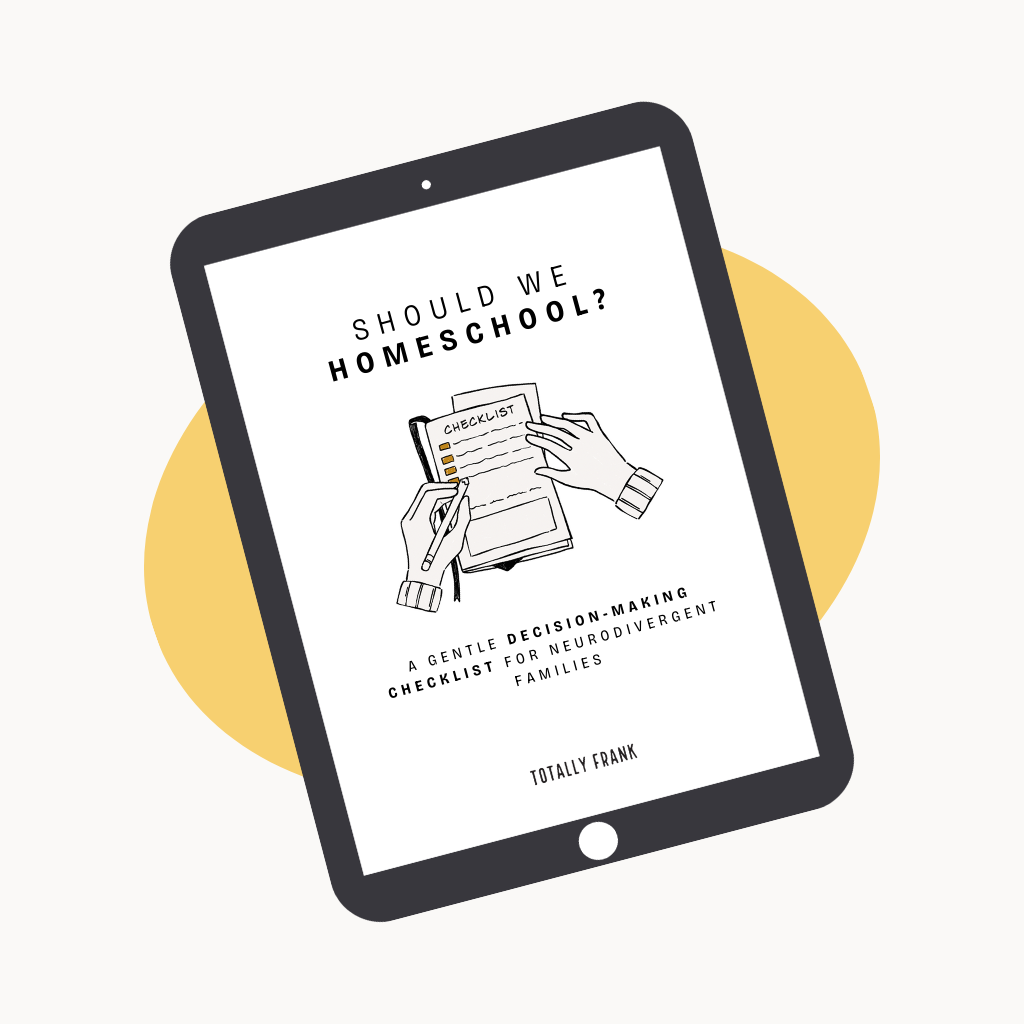
Start here if you’re still deciding
If you’re still at the “Are we really doing this?” stage, this page comes first:
Should I homeschool my neurodivergent child?
When to start transitioning (signs of readiness)
Most parents wait for a green light that never comes.
The truth is, there’s rarely a moment where everything feels stable and you suddenly feel confident. Readiness tends to show up in small, uneven ways – a better morning here, a calmer transition there, then a hard day again.
So instead of asking, “Are we ready to homeschool?”, a more helpful question is:
Is my child’s capacity returning enough to tolerate one small bridge?
When kids are under stress, skills like planning, flexibility, task-starting, and emotional control can get much harder to access. That’s not laziness. That’s load.
Signs your child might be ready for gentle transitions
You might notice:
That’s enough.
You don’t need all of these. You don’t need consistent days. You just need a small window you can work with.

Signs you may need more deschooling time (and that’s OK)
You might still be in full recovery mode if:
If that’s where you are, you’re not doing it wrong. You’re reading the nervous system properly.
If you want realistic examples to compare against (so you can stop second-guessing), read:
What deschooling really looks like (with realistic examples)
How to add gentle rhythm without bringing pressure back
Here’s the biggest trap in this stage:
Parents don’t usually reintroduce pressure on purpose. They do it because they’re scared. They want to be legitimate. They want to prove they’re doing enough. They want to calm their own panic about “falling behind”. So they reach for schedules, curriculum, routines, worksheets, time blocks… and their child’s nervous system hears: school is back.
A gentle transition isn’t “more structure”. It’s more predictability, with less demand.
Start with anchors (not timetables)
Anchors are the simplest things your day can hang off:
If you’re early in this process, anchors are already a win. They help your child feel safe because the day has a shape – without the pressure of a timetable.
Add one “soft edge” at a time
A soft edge is a tiny, predictable moment that doesn’t feel like school.
Choose one:
Pick the smallest version you can imagine. Then halve it again. That’s not being overly cautious. That’s building a bridge that holds.
Use minimum viable structure
This is a simple way to add rhythm without triggering threat:
1 anchor + 1 invitation + 1 exit ramp
This matters because executive function skills are affected by stress and load. Lower demand and more controllable structure can help the brain come back online.
Change the language, change the response
School-shaped words can carry emotional weight.
If your child reacts to “lesson” or “work”, it’s not stubbornness. It’s memory.
Try swapping:
When kids feel safer, they can access more flexibility. When they feel trapped, the brain goes into protection mode.
This is also where a trauma-informed lens is helpful: safety first, then learning.
A gentle transition ladder (example)
This is just one way it can look. You’re allowed to make it smaller.
Week 1: One shared ritual
Week 2: Add one interest invitation
Week 3: Add a second soft edge
If stress spikes, you haven’t failed. You’ve learned the bridge was too big. Then you step back and rebuild smaller.
If you want the broader “start here” foundation (without pressure or perfection), read:
Homeschooling a neurodivergent child
What to do when transitions spike stress (autism and ADHD examples)
This part matters because most families hit a patch where things suddenly feel worse. That doesn’t mean homeschooling is the wrong choice.
It usually means:
First: assume “too much, too fast”
Before you assume avoidance, defiance, or “we’re back to square one”, try this reset:
A calm reset is not “giving in”. It’s keeping learning safe.
If the spike looks sensory or predictability-based (autism example)
Sometimes stress spikes are less about the task and more about the transition itself.
You can soften this by adding:
You’re not trying to push through. You’re trying to reduce threat.
If the spike looks like restlessness and friction with stopping/starting (ADHD example)
Transitions can be hard when the nervous system needs movement and novelty.
Try:
Again, the goal isn’t productivity. It’s engagement without overwhelm.
If any structure triggers panic or shutdown
If your child’s response is intense the moment structure appears, treat that as information.
Then:
If your child is demand-avoidant, this “fit” piece matters even more. The research base here is still developing and debated, but pressure-heavy approaches can increase distress for some kids.
What “legitimate” looks like in this stage
A lot of parents secretly believe: “If we’re not doing school work, it doesn’t count.” But legitimacy isn’t measured in worksheets.
In this season, legitimacy looks like:
That’s not “nothing”. That’s rebuilding the foundation learning needs.

A gentle next step
If you want a steadier starting point for the early weeks and transition phase, I made this to support you:
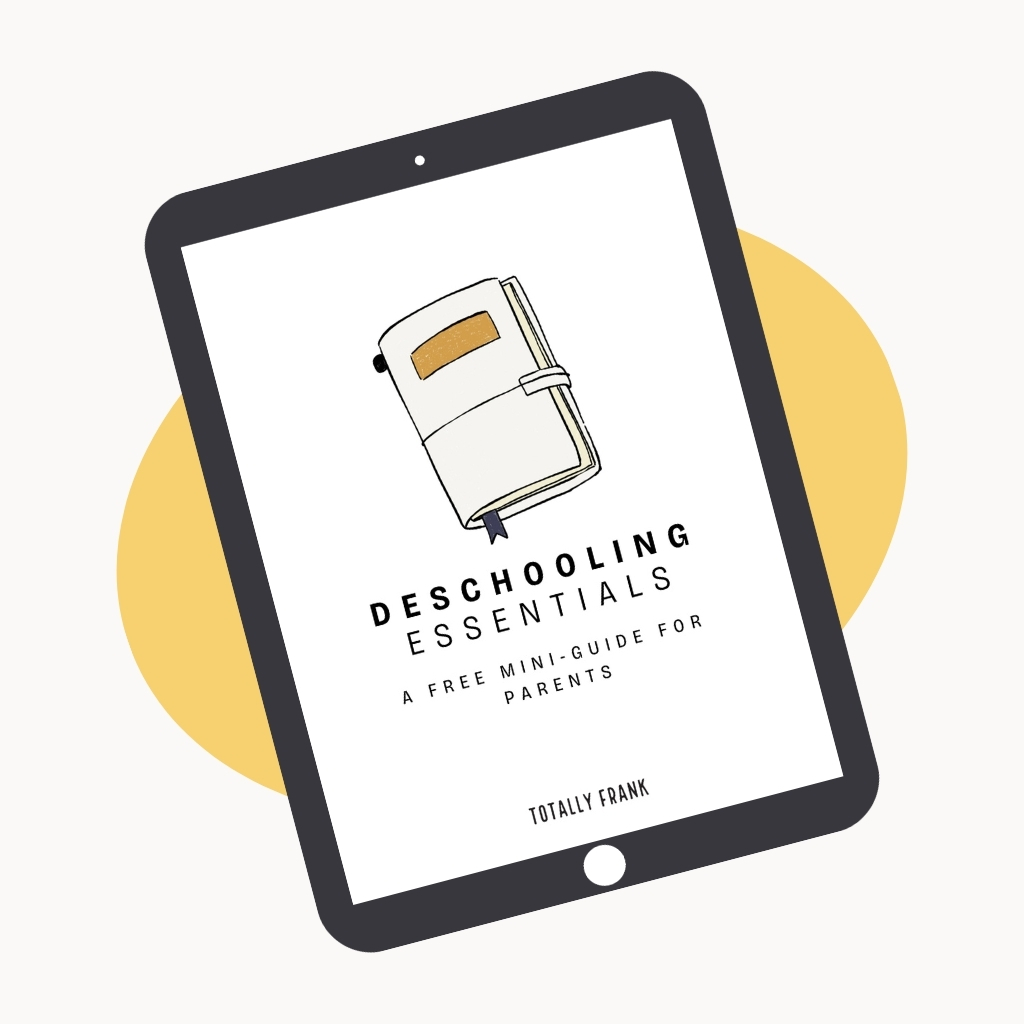
Download: Deschooling Essentials (free)
A simple mini guide covering:
Optional support (no push):
If you want more structure for you (without pressure for them), Your Deschooling Survival Guide can support you through the messy middle.
Frequently asked questions
When do you move from deschooling to homeschooling?
When your child can tolerate one small bridge without it triggering a full stress response.
For some families, that’s weeks. For others, it’s months. There’s no gold star for speed.
A better question is: what’s the smallest step that keeps learning safe?
What are signs my child is ready for gentle transitions?
Look for small signs of returning capacity:
It doesn’t need to be consistent to be real.
What if any structure triggers panic or shutdown?
Go smaller. Return to anchors for a few days, then restart with:
You’re not trying to “teach through it”. You’re trying to rebuild safety.
How do transitions look different for autistic kids?
Often, predictability and sensory load matter more than the content.
A reliable start ritual, a simple preview, and a sensory reset can reduce the transition load and help the day feel more workable.
How do transitions look different for ADHD kids?
Often, movement and task length matter more than the subject.
Short loops, hands-on options, and movement before/after transitions can reduce friction and make engagement easier to access.
Do we need to “start school” at home to be legitimate?
No. You can be legitimate without recreating school.
In the early phase, legitimacy can look like recovery, rhythm, and safer engagement – not formal lessons.
What if we transition too soon and things fall apart?
That’s not failure. That’s data. Step back, stabilise with anchors, and rebuild a smaller bridge.
You haven’t ruined anything. You’ve learned where the nervous system limit is right now.
Read next
What is deschooling (and does my ND child need it)?
What deschooling really looks like (with realistic examples)