Using essential oils safely is the foundation of every good oil routine. Whether you’re making blends for emotional support, sleep, or focus, these guides will help you feel confident using oils – especially with kids and sensitive skin.

Essential Oil Safety for Families

Using essential oils safely is a critical part of building your essential oil toolkit. This page covers the essential oil safety basics you need to get started, from choosing the right dilution to understanding which oils are safe for kids. Whether you’re blending for emotional support, focus, or everyday wellness, these guides will help you use essential oils with confidence.

Essential Oil Dilution

Diluting essential oils is one of the most important steps in using them safely, especially for kids, those with sensitive skin, and anyone new to oils. It helps reduce the risk of skin irritation, makes your oils go further, and actually improves absorption – all while delivering the same powerful support.

Why Dilute Essential Oils?

  • Reduce Skin Sensitivity: Essential oils are highly concentrated and can be irritating if used neat (undiluted). Diluting them with a carrier oil like Fractionated Coconut Oil, Jojoba, or Sweet Almond Oil reduces this risk and makes them easier to absorb.
  • Better Absorption: Diluting oils actually enhances absorption by slowing the rate of evaporation, allowing the essential oil to stay on the skin longer and work more effectively.
  • Cost-Effective: Using a carrier oil means you need less essential oil per application, which makes your oils last longer.

Essential Oil Dilution Chart

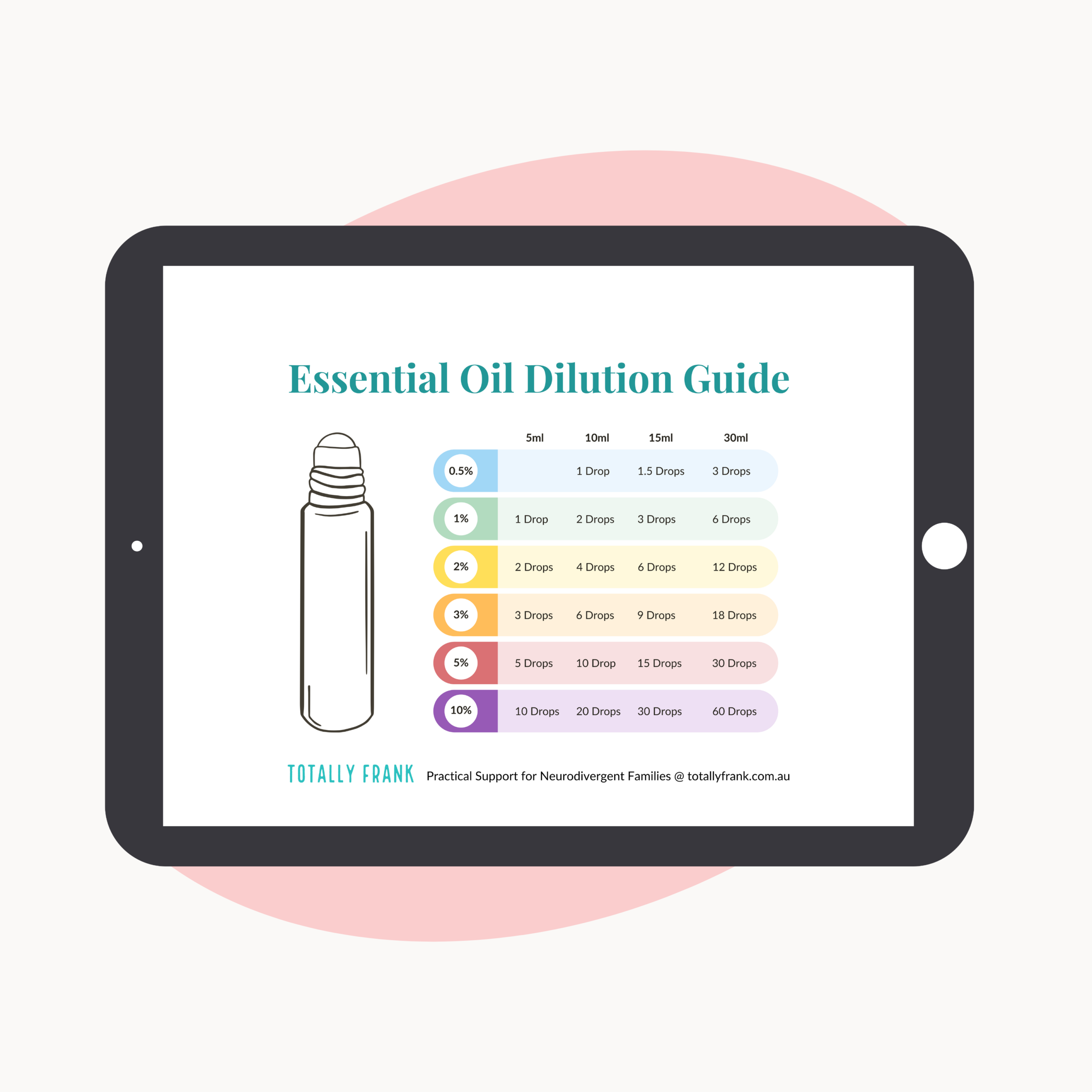
Here’s a quick reference guide for diluting essential oils based on bottle size and desired strength:

Here's alt text for the image: "Essential Oil Dilution Guide" by Totally Frank. A chart displays essential oil dilution ratios for various bottle sizes (5ml, 10ml, 15ml, and 30ml) and dilution percentages (0.5% to 10%). For example, a 1% dilution requires 1 drop for 5ml, 2 drops for 10ml, 3 drops for 15ml, and 6 drops for 30ml. An illustration of a roller bottle is on the left side of the chart.

Dilution for Kids

  • Under 6 Years Old: Use a 0.5-1% dilution (1 drop of essential oil per 10 mL of carrier oil).
  • Ages 6 to 12: Use a 1-2% dilution (1-2 drops of essential oil per 5 mL of carrier oil).
  • Over 12 Years: You can increase to a 3-5% dilution depending on their sensitivity (3-5 drops of essential oil per 5 mL of carrier oil).

My Best Advice: Start with less – you can always add more. I’ve found this especially important when using oils with my boys, who can have big reactions to strong scents. If you have kids or family members with sensory sensitivities, it’s a good idea to have them take a small sniff before diffusing or applying a new oil. I learned this the hard way after slathering myself in a new blend my husband hadn’t smelled yet – just before jumping in the car!

Final Tips for Safe Essential Oil Dilution

  • Patch Test New Blends: Always test a small amount of your blend on the inside of your wrist or elbow before wider use – it’s worth the extra step.
  • Adjust for the Application Area: Areas like the face, neck, and underarms are more sensitive and should always use a lower dilution.
  • Combine with Moisturising Carriers: For dry or sensitive skin, use a nourishing carrier oil like Sweet Almond Oil or Jojoba for better hydration.
  • Check for Photosensitivity: Some oils can cause skin to burn or blister if exposed to sunlight – more on this below.

Carrier Oils

Carrier oils are the unsung heroes of essential oil blending. They not only dilute your oils for safe use, but they also enhance absorption, reduce evaporation, and moisturise the skin. Choosing the right carrier oil can make a real difference to the feel and effectiveness of your blends, so it’s worth knowing a bit about the options.

Popular Carrier Oils

Fractionated Coconut Oil
  • Light, non-greasy, and fast-absorbing.
  • Clear and liquid at all temperatures, making it a great all-purpose choice.
  • Has a long shelf life and won’t clog pores, which makes it a favourite for rollers and massage blends.
Jojoba Oil
  • Closest to the natural oils in your skin.
  • Absorbs quickly and leaves a soft, satiny feel.
  • Naturally antibacterial and non-comedogenic, so it’s great for face blends.
Sweet Almond Oil
  • Rich in vitamins A, B, and E.
  • Great for dry or sensitive skin and has a slightly nutty scent.
  • A bit heavier than some other carrier oils, so better for body blends.
  • A bit heavier than some other carrier oils, so better for body blends.
Grapeseed Oil
  • Lightweight and fast-absorbing.
  • High in antioxidants and linoleic acid, making it a good choice for oily or acne-prone skin.
  • Has a slightly astringent feel, so it works well for massage and muscle blends.
Avocado Oil
  • Ultra-rich and deeply nourishing.
  • Packed with fatty acids and vitamins, making it great for dry or mature skin.
  • Thicker and slower to absorb, so better for small areas or deeply moisturising blends.
Olive Oil
  • Deeply hydrating and packed with antioxidants.
  • Heavier and slower to absorb, but great for dry or rough skin.
  • Has a stronger scent, so best used in small amounts or with stronger essential oils.
Hemp Seed Oil
  • High in omega fatty acids and vitamins.
  • Absorbs quickly and has a slightly earthy scent.
  • Great for inflamed or problem skin, but can spoil quickly, so store it carefully.
Rosehip Oil
  • Rich in vitamin C and antioxidants.
  • Known for its regenerative properties, making it great for scars and ageing skin.
  • Can be a bit pricier, so often used in facial blends or serums.
Argan Oil
  • Light but deeply moisturising.
  • High in vitamin E and fatty acids, making it great for hair, nails, and skin.
  • Absorbs quickly and doesn’t leave a greasy residue.

Choosing the Right Carrier Oil

Here’s a quick reference guide for diluting essential oils based on bottle size and desired strength:

  • For Face Blends: Choose a lighter oil like Jojoba or Rosehip, which won’t clog pores.
  • For Body Blends: Use something a bit richer, like Sweet Almond or Avocado Oil, for better hydration.
  • For Massage: Look for a medium-weight oil like Grapeseed or Fractionated Coconut Oil, which spread easily and don’t absorb too quickly.
  • For Sensitive Skin: Choose a gentle, nourishing oil like Jojoba or Hemp Seed Oil.
  • For Oily or Acne-Prone Skin: Go for something lighter, like Grapeseed or Jojoba, which won’t leave a greasy residue.

A Few Tips

  • Mix and Match: Don’t be afraid to mix a few different carrier oils to get the texture and absorption you like.
  • Shelf Life Matters: Some oils, like Hemp Seed and Avocado, have a shorter shelf life and can go rancid if not stored properly.
  • Test for Sensitivity: Just like essential oils, some carrier oils can cause skin reactions, so patch test if you’re trying a new one.

Using oils with children

When it comes to using essential oils with kids, less is more. Children’s skin is more sensitive, and their systems are still developing, so it’s important to stick to gentle, kid-safe oils and lower dilution ratios. This doesn’t mean your options are limited – there are still plenty of beautiful, supportive oils that work well for kids.

General Tips for Using Essential Oils with Kids

  • Start Low and Go Slow: Always use a lower dilution for kids – 0.5-1% for little ones and up to 2% for older kids.
  • Watch for Sensory Sensitivities: If your kids are like mine, you’ll know that strong scents can be overwhelming. I always let my boys smell a new oil before diffusing or applying it, just to make sure it’s not too much.
  • Patch Test First: Even kid-safe oils can cause a reaction in some children, so always test a small amount first.
  • Consider the Application Area: Avoid sensitive areas like the face, neck, and underarms, and always dilute more for these spots.

Kid Safe Single Oils

  • Lavender: Calming and soothing – great for sleep and winding down.
  • Frankincense: Grounding and supportive – ideal for focus and emotional balance.
  • Roman Chamomile: Gentle and calming – perfect for restless nights and emotional upsets.
  • Cedarwood: Great for promoting calm and grounding – a favourite in my house.
  • Mandarin: Uplifting and bright, but gentler than many other citrus oils – great for energy and focus.
  • Spearmint: A milder alternative to Peppermint – helps with focus and clear thinking.
  • Tea Tree: Powerful but gentle enough for kids – great for skin support and immune boosting.
  • Bergamot: Calming and uplifting, but be mindful of photosensitivity if using topically.

Kid Safe Blends

If you’re a dōTERRA fan like I am, you might also want to consider some of their pre-made kids blends, which are formulated for sensitive skin and little noses:

  • Calmer: Perfect for bedtime and emotional overwhelm.
  • Brave: Uplifting and encouraging – great for those moments when kids need a little extra courage.
  • Rescuer: Comforting and soothing – ideal for aches, growing pains, and those tender “I don’t feel right” moments.
  • Stronger: A gentle, immune-boosting blend that’s perfect for building resilience.
  • Steady: Grounding and centering – helps kids find their focus and feel more secure.
  • Tamer: Soothing for tummy upsets and queasy feelings – especially helpful during overwhelm or sensory overload.
  • Thinker: A great alternative to Peppermint for supporting focus and clear thinking.
Seven doTERRA Kid’s Collection essential oil rollers - Thinker, Calmer, Stronger, Tamer, Steady, Rescuer, and Brave - are neatly lined up on a white shelf against a pegboard wall, next to colorful paper and pencils. These kid-safe oils are designed with gentle blends for focus, relaxation, immunity, digestion, and emotional support.

Oils to Avoid for Kids

While many essential oils are perfectly safe for children, there are a few that should be avoided until they’re older:

  • Peppermint (best for kids over 6).
  • Eucalyptus (best for kids over 10).
  • Wintergreen (not recommended for children).
  • Hot Oils like Oregano, Thyme, Clove, and Cassia.

A Few Final Tips

  • Use a Roller for Easy Application: Pre-diluted roller blends are a great way to keep things simple – just roll and go.
  • Diffuse Wisely: Kids don’t need long diffusing sessions – 30-60 minutes is usually plenty.
  • Personalise Your Blends: Don’t be afraid to experiment with kid-safe oils to find the combinations that work best for your family.

Photosensitivity

Some essential oils can cause photosensitivity, which means they can make your skin more sensitive to UV rays and increase the risk of sunburn, blistering, or skin discoloration if exposed to sunlight. This is something to keep in mind, especially if you’re using oils in topical blends for yourself or your kids.

Photosensitive oils typically contain furanocoumarins, a group of compounds that react with UV light and cause a phototoxic reaction. This can lead to redness, burning, and long-lasting dark spots if the skin is exposed to direct sunlight or UV rays shortly after application.

Common Photosensitive Oils

  • Bergamot
  • Green Mandarin
  • Grapefruit
  • Lemon
  • Lime
  • Tangerine
  • Wild Orange

Using Photosensitive Oils Safely

  • Dilute Well: Always dilute photosensitive oils properly – this reduces the risk of a phototoxic reaction.
  • Apply to Covered Skin: Apply these oils to areas that will be covered by clothing if you plan to be outdoors.
  • Avoid Sun Exposure: If you’re using these oils topically, avoid direct sunlight or UV exposure for at least 12-24 hours after application.
  • Consider Diffusing Instead: If you want the benefits of these oils without the risk, try diffusing them instead of using them topically.
  • Check Your Blends: Be aware that some pre-made blends may contain photosensitive oils, so always check the ingredients if you’re planning to use a blend before heading out into the sun.

Personal Tips

I’ve found that oils like Bergamot and Lemon are brilliant for emotional support and uplifting the mood, but I tend to keep them for diffuser blends or nighttime rollers so I don’t have to worry about sun exposure. If I’m making a daytime blend, I’ll often reach for something like Cedarwood or Spearmint instead – they have a similar bright, fresh vibe without the phototoxicity risk.

Hot Oils & Skin Sensitivity

Some essential oils are known as “hot” oils because they can cause a warming, tingling, or even burning sensation if applied to the skin undiluted. These oils tend to have a more potent chemistry, making them great for muscle relief, respiratory support, or warming up cold hands and feet, but they also need a bit of extra caution.

Common Hot Oils

  • Cassia
  • Cinnamon Bark
  • Clove
  • Oregano
  • Thyme
  • Wintergreen
  • Peppermint (cooling but still intense)
  • Black Pepper
  • Ginger

Tips for Using Hot Oils Safely

  • Dilute Heavily: Use a 0.5-1% dilution for these oils, even for adults. Hot oils should always be diluted more than gentler oils.
  • Patch Test First: Always test a small amount on less sensitive skin before wider use, especially for kids or anyone with sensitive skin.
  • Avoid Sensitive Areas: Keep these oils away from eyes, face, neck, and other sensitive areas. They can be particularly intense on thin or delicate skin.
  • Use a Barrier Oil: For particularly hot oils, consider using a heavier carrier oil like Fractionated Coconut Oil or Jojoba, which provide a better buffer for the skin.
  • Use a Pre-Diluted Roller: Pre-diluted rollers take the “guess work” out of it for you.
  • Wash Off with a Carrier Oil: If you accidentally apply too much, never wash off with water – this can drive the oil deeper into the skin. Instead, use a carrier oil to dilute further.

Personal Tips

I’ve found that some of these oils, like Oregano and Clove, are incredibly powerful, but they’re also the ones most likely to cause a reaction if you’re not careful. I tend to keep them for adults-only blends or diffuser recipes and always double-check my dilution ratios. My boys are sensitive to strong smells, so I avoid using these oils topically on them altogether.

Patch testing and allergies

Even with high-quality, pure essential oils like dōTERRA’s, it’s still possible to experience a skin reaction if you have a sensitivity or allergy. This is especially true if you’re using a new oil or blend for the first time. Patch testing essential oils is a simple, effective way to check for any adverse reactions before you apply an oil more widely.

Why Patch Testing is Important

  • Identifies Sensitivities: Even kid-safe or commonly used oils can cause a reaction in some people.
  • Prevents Discomfort: Catching a potential sensitivity early means you can avoid redness, itching, or irritation.
  • Builds Confidence: Knowing that an oil works for you or your family can make you more confident in using it regularly.

How to Patch Test an Essential Oil

  • Dilute the Oil: Mix 1 drop of the essential oil with 5-10 drops of a carrier oil.
  • Apply to a Small Area: Dab a small amount of the diluted oil onto the inside of your wrist, elbow, or behind the ear – somewhere with thinner, more sensitive skin.
  • Wait for 24 Hours: Watch the area for redness, itching, or irritation over the next day.
  • Check for Delayed Reactions: Some sensitivities can take longer to show up, so check the area again after 48 hours if you’re being extra cautious.

First Aid for Reactions

Even with careful dilution and patch testing, essential oil reactions can still happen – especially with hot oils or if you accidentally use too much. The good news is that most reactions are mild and easily managed if you know what to do.

Signs of an Essential Oil Reaction

  • Redness or Irritation: The skin may become red, itchy, or inflamed shortly after applying the oil.
  • Burning or Tingling: Some oils, especially hot oils like Oregano or Clove, can cause a burning or tingling sensation if not properly diluted.
  • Rash or Bumps: In more severe cases, a rash or small bumps may appear at the application site.
  • Respiratory Discomfort: If diffused too strongly, some oils can irritate the respiratory system, especially in small children or those with asthma.

What to Do if a Reaction Occurs

  • Dilute, Don’t Rinse: Use a carrier oil like Fractionated Coconut Oil or Jojoba to dilute the area further – never use water, as this can drive the oil deeper into the skin.
  • Remove the Oil: Gently wipe the area with a soft cloth soaked in carrier oil to remove as much of the essential oil as possible.
  • Soothe the Skin: Apply a calming oil like Lavender or Frankincense to help reduce redness and irritation.
  • Stay Out of the Sun: If the oil was photosensitive (like Lemon or Bergamot), keep the area covered or out of direct sunlight for at least 12-24 hours.
  • Monitor for Ongoing Symptoms: If the reaction continues or worsens, consider seeking medical advice.
  • Re-Test Later: If you’re determined to use the oil again, try a lower dilution and patch test before applying to a larger area.

Personal Tips

I’ve had my share of “whoops” moments, like the time I forgot just how intense Oregano can be when applied neat. Now, I always double-check my dilutions, especially when using hot oils or trying a new blend. It’s one of those “learn the hard way” lessons I don’t need to repeat!

Storage and shelf life

Proper storage is essential for keeping your oils fresh, potent, and effective. Essential oils are highly concentrated plant extracts, and while they can be incredibly powerful, they’re also sensitive to light, heat, and air. With a bit of care, you can extend their shelf life and protect your investment.

Why Proper Storage Matters

  • Preserves Potency: Light, heat, and oxygen can break down the volatile compounds in essential oils, reducing their effectiveness.
  • Prevents Oxidation: Oxygen exposure can cause oils to oxidise, which not only reduces their therapeutic benefits but can also increase the risk of skin irritation.
  • Protects Scent Profile: Poorly stored oils can lose their distinctive aroma over time, which affects their emotional and aromatic benefits.

Tips for Storing Your Essential Oils

  • Use Dark Glass Bottles: Always store your essential oils in dark amber or cobalt glass bottles. These block UV light, which can degrade the oil’s active compounds.
  • Keep Away from Heat: Store your oils in a cool, dark place – a cupboard or drawer is ideal. Avoid keeping them in the bathroom or near a heat source.
  • Tighten Lids Properly: Oxygen exposure can quickly degrade an oil, so always tighten the lids securely after each use.
  • Store Upright: Keep your bottles upright to prevent the oil from degrading the cap or dropper over time.
  • Avoid Plastic Containers: Essential oils can break down plastic, so always transfer oils to glass bottles if you’re making a blend.
  • Check for Changes: If an oil’s colour, consistency, or scent changes, it might be past its prime. Some oils, like Lemon and Wild Orange, have shorter shelf lives and should be replaced more often.

Shelf Life of Common dōTERRA Essential Oils

  • Citrus Oils (Lemon, Wild Orange, Lime, Bergamot, Grapefruit) – 1-2 years.
  • Florals (Lavender, Rose, Ylang Ylang, Geranium) – 3-5 years.
  • Resins (Frankincense, Myrrh, Copaiba) – 5-10 years.
  • Woods (Cedarwood, Sandalwood) – 6-8 years.
  • Spices (Clove, Cinnamon, Oregano, Ginger) – 3-5 years.

Note: These are just general guidelines – proper storage can extend these times significantly.

Personal Tips

I (try to) store my essential oils in a small, dark cupboard away from the heat of the kitchen and bathroom. I also check the lids regularly to make sure they’re on tight, especially for those bottles my boys reach for often. And if you’ve got a bunch of roller blends on the go, it’s worth checking them occasionally for leaks or loose caps – it’s amazing how quickly a small spill can empty a bottle!