If school feels hard for your neurodivergent child, you’re not imagining it. Many families start to wonder whether homeschooling might help – but it’s not always a simple decision. Here’s what it can look like, and when it tends to work best.
How does homeschooling help neurodivergent kids
If you’re exploring neurodivergent homeschooling, chances are school has become a daily stress point – not just a place your child goes.
Maybe your child is refusing, shutting down, panicking, masking all day then falling apart at home – or you’re watching them disappear under the weight of expectations that don’t fit. And now you’re stuck in that awful in-between: you know something has to change, but you’re terrified of making it worse.
Homeschooling can be one of the first big shifts neurodivergent families make when school pressure has built up for too long. It’s not “giving up”. It’s not lowering expectations. It’s changing the environment so a child can recover and reconnect with learning – in a way their nervous system can handle.
I didn’t set out to homeschool either. We reached this point because we had to take the pressure off before anything else could work.
On this page, I’ll explain what changes when stress comes down, why “fit” matters more than forcing, and how homeschooling can support autistic kids and kids with ADHD – without recreating school at home.
A quick summary
Homeschooling can reduce some of the pressure many neurodivergent kids experience in traditional school environments.
When that pressure eases, some children begin to re-engage with learning – slowly, unevenly, and in ways that don’t always look like school.
This is about fit, not forcing.
It’s not “no structure”. It’s gentle structure that doesn’t escalate distress.
You don’t have to decide everything today. You can start with small, pressure-off shifts and build from there.
If you’d like a steadier voice while school feels heavy
I send one email a week – calm reflections and practical support for neurodivergent families when school is getting hard.
No pressure. No perfection. Just steadiness in the middle of it.
Why school can be so hard for neurodivergent kids
For many neurodivergent kids, the challenge isn’t learning.
It’s the environment they’re expected to learn in.
School often comes with constant demands – instructions, transitions, expectations, social pressure – all happening at once, all day, every day.
For a child who is already working hard to cope, that can add up quickly.
Some of the most common things parents notice are:
Constant demand and lack of control
Being told what to do, when to do it, and how to do it – all day long – can feel overwhelming, especially for kids who need more autonomy or flexibility.
Sensory overload
Busy classrooms, noise, bright lights, movement, and unpredictability can make it hard to feel calm or focused, even when a child is trying their best.
Pressure to keep up
Learning is often paced for the group, not the individual. Some kids need more time, more breaks, or a completely different approach.
Holding it together all day
Some children appear to cope at school, but use so much energy doing so that there’s nothing left by the time they get home.
Increasing anxiety or resistance
Over time, this can show up as reluctance to go to school, emotional outbursts, or a child who simply can’t do it anymore.
If you’re seeing these patterns, it doesn’t mean your child is failing.
It may be a sign that the environment itself is asking too much.
If you want to better understand what’s happening underneath things like school refusal or shutdown, learning more about why school stops working for some neurodivergent kids can help make sense of what you’re seeing.
How homeschooling can support (when it’s a better fit)
When school isn’t a good fit for a child, changing the environment can make a difference.
Homeschooling doesn’t remove every challenge. But it can reduce some of the pressure points that make learning feel overwhelming in the first place.
Here’s how that can look in practice:
Less pressure, more space to regulate
Without the constant pace and demand of a school day, some children begin to feel calmer and more settled.
Research shows that high stress levels can interfere with memory, attention, and learning – especially for children who are already working hard to cope.
This doesn’t mean everything improves overnight. But having more space can make it easier for a child to recover from overwhelm and slowly rebuild their capacity to engage.
Flexible pacing
Instead of needing to keep up with a group, learning can happen at a pace that actually works for the child.
Some days that might mean doing very little. Other days, it might look like deep focus on something they care about.
Both can be part of the process.
There’s strong evidence that autonomy and a sense of control play a key role in motivation and engagement, particularly for neurodivergent learners.
Learning that connects to interests
When learning is shaped around what a child is naturally drawn to, engagement often looks very different.
This might not look like traditional schoolwork – but it can still be meaningful, real learning.
Research into home education and alternative learning environments suggests that when children have more flexibility and choice, engagement and intrinsic motivation can increase).
A safer, more predictable environment
Being in a space where expectations are clearer and support is consistent can reduce the need for a child to constantly push through discomfort.
Over time, this can make it easier for them to participate, engage, and feel more like themselves.
It’s important to say that homeschooling isn’t a quick fix.
For many families, there’s a period of decompression before learning starts to feel accessible again.
That’s a normal part of the process – not a sign that it’s not working.
When homeschooling can help the most
Homeschooling isn’t the right choice for every family.
But there are certain situations where it can make a meaningful difference – especially when the gap between a child and the school environment becomes too wide.
Some of the most common situations where families begin to consider homeschooling are:
Ongoing school distress or school refusal
When a child is regularly anxious, overwhelmed, or unable to attend school, it’s often a sign something deeper isn’t working.
Research shows that school non-attendance is frequently linked to anxiety, distress, and unmet needs – not simply behaviour or defiance.
In these situations, continuing to push through the same environment can sometimes increase the pressure, rather than resolve it.
Burnout and chronic overwhelm
Some children cope at school for a long time – until they can’t anymore.
This can look like exhaustion, shutdown, increased anxiety, or a child who no longer has the capacity to engage in learning or daily expectations.
Autistic burnout, in particular, is increasingly recognised as a real experience linked to prolonged stress and demand.
When a child reaches this point, reducing load – not increasing pressure – often becomes the priority.
High demand avoidance (including PDA profiles)
For some children, the structure and expectations of school can feel overwhelming or even threatening.
This isn’t about unwillingness. It’s often linked to anxiety, intolerance of uncertainty, and a strong need for autonomy.
Research into demand avoidance profiles highlights how increased pressure can lead to increased resistance – not improved engagement.
In these cases, a more flexible, low-demand environment can sometimes make participation feel possible again.
When support at school isn’t enough
Many schools try to support neurodivergent children – and sometimes that helps.
But sometimes, even with support in place, the environment itself is still too demanding.
Adding more support inside the same system doesn’t always reduce the overall load a child is experiencing.
This is something many families notice before they begin considering alternatives.
When the child is “coping” at school but not at home
Some children hold everything together during the school day – and release it all afterwards.
This can look like:
This pattern can be a sign that a child is using a significant amount of energy just to get through the day.
Homeschooling isn’t about removing all challenges.
It’s about adjusting the environment so that learning is still possible without overwhelming the child’s capacity.
For some families, that shift makes a significant difference.
When homeschooling might not be the right fit (yet)
Homeschooling can be a helpful option for some families.
But it’s not always the right step right now – and that matters just as much.
Sometimes the timing, capacity, or expectations around homeschooling need to shift before it becomes a supportive option.
When the expectation is “school at home”
One of the biggest challenges families face is trying to recreate school at home.
Same structure. Same expectations. Same pace.
But for many neurodivergent kids, that’s the part that wasn’t working in the first place.
Homeschooling often looks very different – especially in the beginning.
And if that shift hasn’t happened yet, it can feel like nothing has improved.
When there’s no space for decompression
For many children, there’s a period where learning takes a back seat while the nervous system recovers.
This can look like:
Research shows that stress and overwhelm can significantly impact a child’s ability to access learning in the first place.
If there isn’t space for this phase, homeschooling can feel like it’s “not working” – when it’s actually just being rushed.
When support systems aren’t in place (yet)
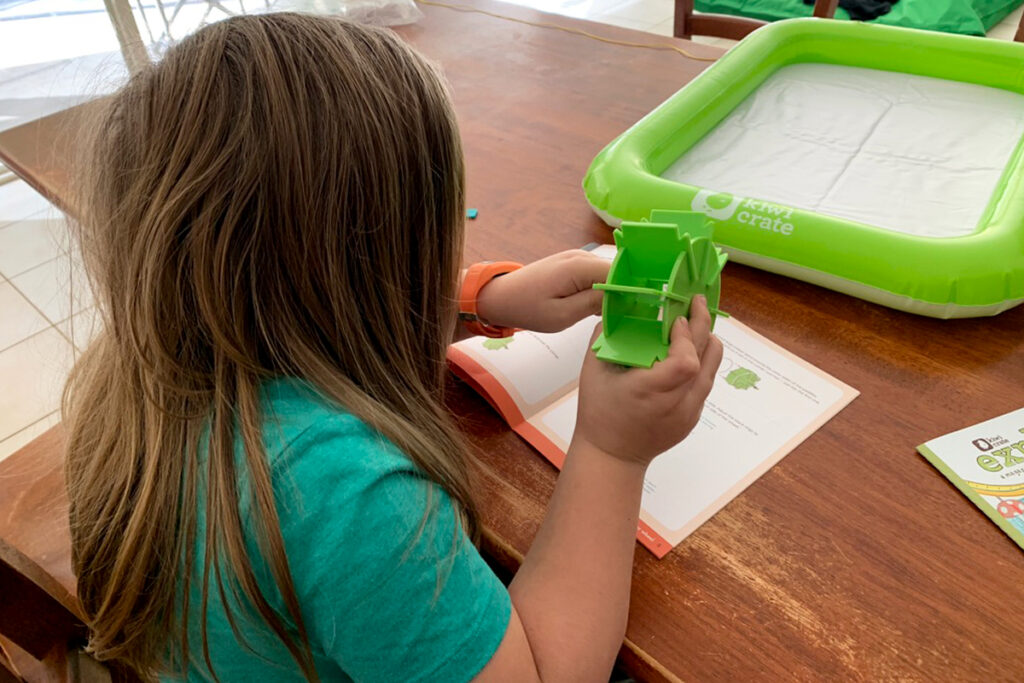
Homeschooling doesn’t mean doing everything alone.
Support might look like:
If none of that is in place yet, it can make things feel harder than they need to be.
That doesn’t mean homeschooling isn’t an option.
It might just mean it needs more support around it.
When it doesn’t feel like the right step
Sometimes, even when school is hard, homeschooling doesn’t feel like the right choice.
That matters.
There isn’t one “right” path for every child or every family.
What matters most is finding something that feels sustainable and supportive – not something that adds more pressure.
You don’t have to rush this decision.
And you don’t have to get it perfect.
For many families, this is a gradual shift – not a single, all-or-nothing step.
Gentle next steps (only if you want them)
You don’t need to decide anything today.
If this article has helped you see things a little more clearly, that’s enough for now.
Some families choose to stay connected to school and focus on reducing daily stress – protecting recovery time, adjusting expectations, and noticing what helps their child cope.
Others begin to explore alternatives, often by slowing everything down first.
There’s no right pace, and no single path.
If you’re still figuring things out
If you’re sitting somewhere in the middle – unsure, overwhelmed, or just needing space to think – you might find it helpful to work through a more structured reflection.
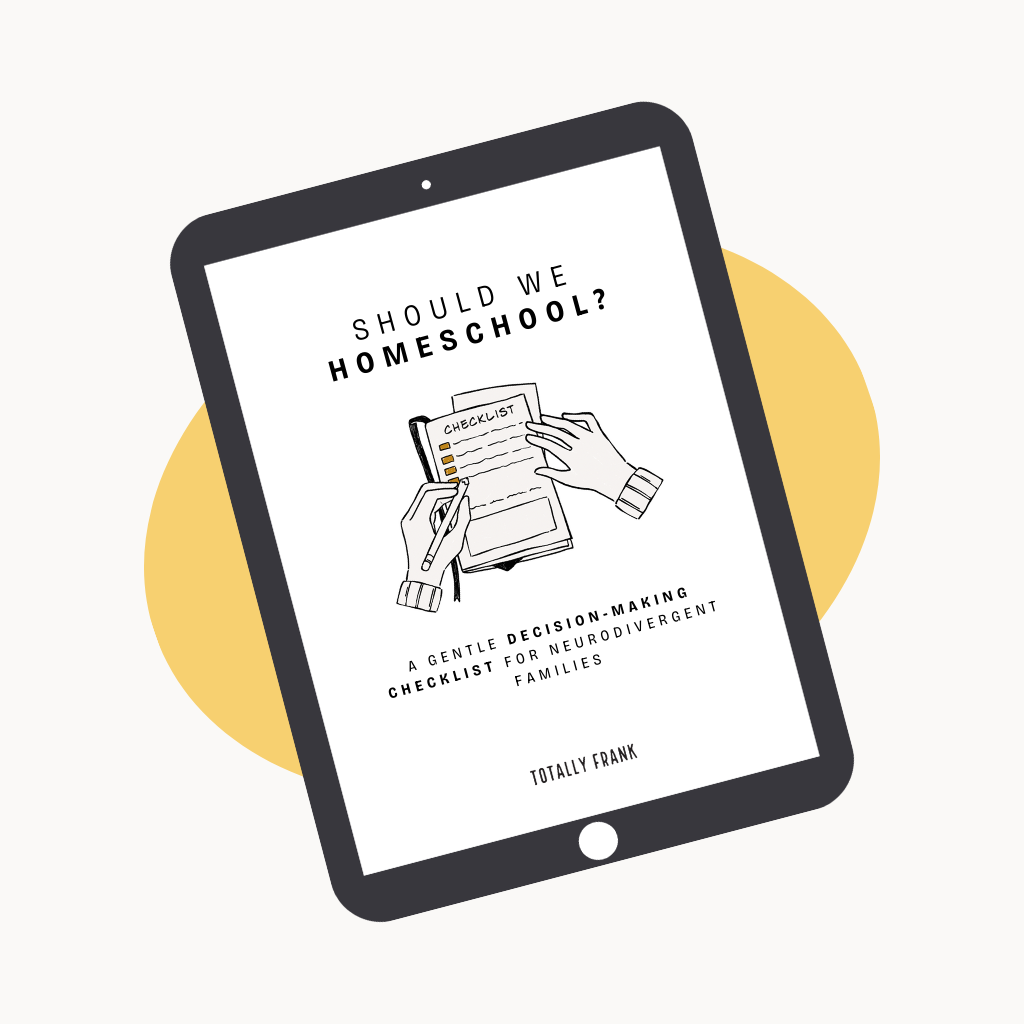
The Should We Homeschool? gentle decision-making checklist for neurodivergent families is designed to help you step back, reduce the noise, and notice what’s actually happening for your child and your family right now.
It’s not a guide to push you toward homeschooling.
It’s a pause.
A way to ask:
And most importantly:
What would reduce pressure – even a little?
As my checklist explains, you don’t need to justify your answers to anyone. They’re information, not a judgement.
👉 You can explore the Should We Homeschool? checklist if and when it feels helpful.
If you’re already leaning toward change
If you’re starting to feel like your child might need less pressure right now, learning more about what happens after that decision can help.
Understanding how to step out of school-shaped expectations – and what learning can look like without them – can make this transition feel much less overwhelming.
If you just need to feel less alone
You’re very welcome to take your time with all of this.
There’s no requirement to act.
There’s no single right answer.
And you’re not the only one figuring this out.
You’re welcome to join my Facebook group Neurodivergent Homeschooling, where parents share experiences and support each other when school stops working.
You’re allowed to pause.
You’re allowed to gather information.
You’re allowed to change direction later.
And you’re allowed to choose what supports your child – and your family – right now.
Frequently asked questions
Frequently asked questions about homeschooling neurodivergent kids.
Does homeschooling actually help neurodivergent kids?
For some children, yes.
When the main challenge is the school environment – things like constant demand, sensory overload, or pressure to keep up – changing that environment can reduce stress and make learning feel more accessible.
That said, homeschooling isn’t a universal solution. It depends on your child, your family, and what kind of support is in place.
Will my child fall behind if we homeschool?
This is one of the most common fears.
But “falling behind” depends on how learning is being measured.
Many neurodivergent children don’t follow a straight, standardised path in the first place. When pressure is reduced and learning is allowed to happen in a way that fits the child, progress often looks different – but that doesn’t mean it isn’t happening.
What if my child won’t engage with learning at home?
This can happen – especially at the beginning.
For many children, there’s a period of decompression after leaving or reducing school pressure. During this time, it might look like they’re doing very little.
But often, this is part of recovery.
Learning doesn’t stop – it just looks different for a while.
Do I need to follow a curriculum when homeschooling?
Not necessarily.
Some families use structured programs. Others take a more flexible or interest-led approach.
What matters most is finding something that works for your child – not replicating school at home.
Is homeschooling realistic if I’m already overwhelmed?
This is a really important question.
If you’re already at capacity, jumping straight into homeschooling can feel like too much.
For many families, the first step isn’t “start homeschooling”.
It’s reducing pressure, building support, and creating space to think clearly about what’s sustainable.
How do I know if homeschooling is the right choice for us?
There isn’t a single clear answer.
It’s often less about finding the “right” decision and more about noticing what’s working – and what isn’t – right now.
If school is consistently leading to distress, exhaustion, or shutdown, it can be worth exploring whether a different approach might better support your child.
If you’re unsure, taking time to reflect – without pressure to decide – can be a helpful first step.
Is homeschooling better for autistic or ADHD children?
Homeschooling can be helpful for some autistic and ADHD children, particularly when school environments are contributing to stress or overwhelm.
But it’s not about one option being “better” overall – it’s about finding the right fit for each individual child.