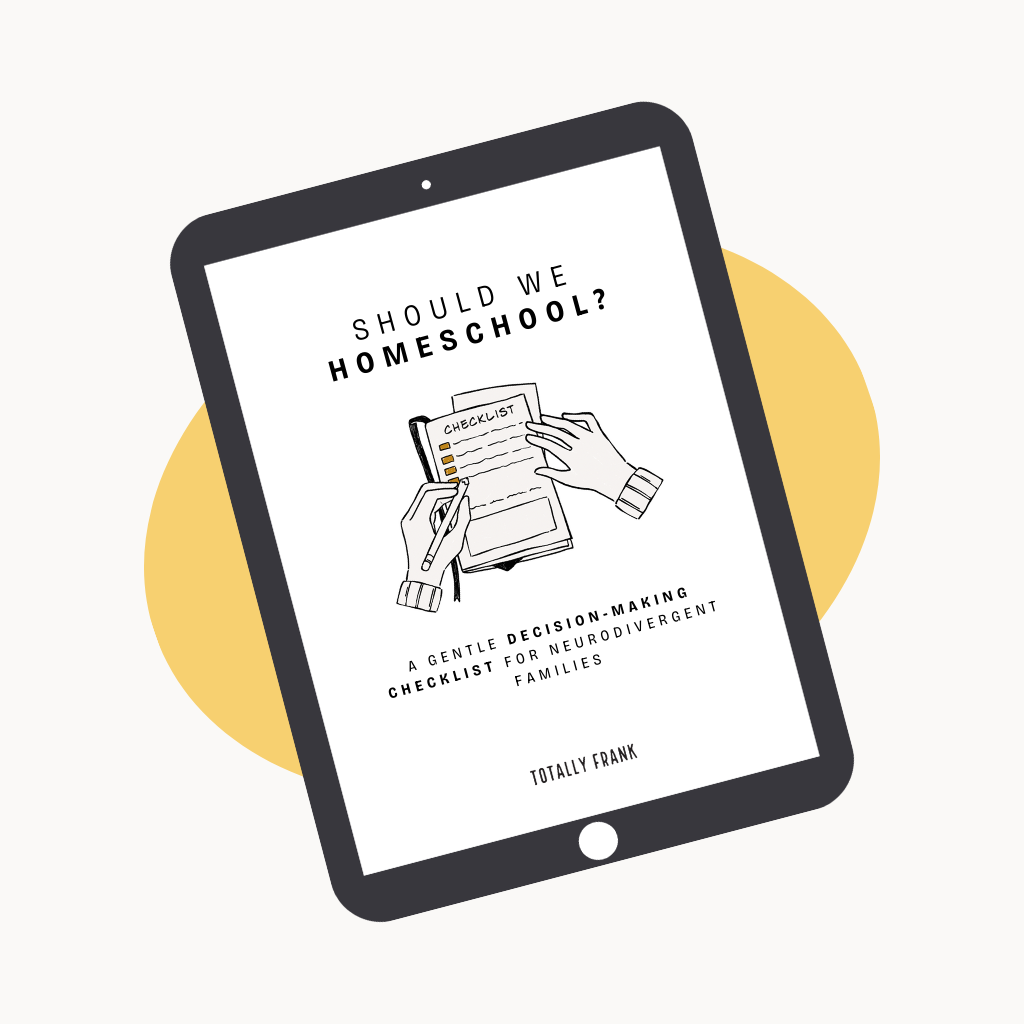
If you’re asking should I homeschool your neurodivergent child, it’s likely things haven’t been feeling right for a while. This guide helps you think it through gently, without pressure or needing to decide everything today.
You’re Not Wrong for Wondering “Should I Homeschool”
If you’re asking this question, you’re probably not doing it lightly.
Most parents don’t wake up one morning and casually wonder whether to homeschool. This question usually comes after months – sometimes years – of watching your child struggle, trying every support offered, and realising that something still isn’t right.
I want to be upfront about this, because it matters for trust.
We didn’t set out to homeschool. In fact, we were hesitant – even reluctant. But with hindsight, I can honestly say it’s the best decision we’ve ever made for our family, and one I would never go back from.
That doesn’t mean homeschooling is the right answer for everyone. It does mean this question deserves to be taken seriously – without fear, urgency, or pressure.
Asking “Should I homeschool?” doesn’t mean you’ve decided anything. It means you’re paying attention.
A Quick Summary
If you’re wondering whether you should homeschool your neurodivergent child, you’re probably not looking for a hot take.
You’re trying to make sense of something that’s been getting heavier over time.
For many families, this question comes up when:
Homeschooling isn’t a magic fix. And it isn’t the only option.
But it can be a legitimate way to reduce pressure and increase safety – so learning becomes more possible again.
You don’t have to decide today.
You just need a clearer lens – and one gentle next step.
If you’re still in the decision swirl
Why Families Start Thinking About Homeschooling
If you’re asking this question, something important is already happening.
Most families don’t ask ‘should I homeschool’ lightly – this question usually comes after things have felt hard for a while.”
Parents of autistic, ADHD, PDA, anxious, or otherwise overwhelmed kids often arrive at this question after a long stretch of holding things together.
School may once have felt manageable – or it may never have. Either way, the cost is starting to show. That might look like increasing anxiety, emotional collapse after school, constant exhaustion, or a family life that feels dominated by stress and recovery.
Wondering “should I homeschool” isn’t a failure of commitment to education. It’s often a sign that the current environment is asking more than your child’s nervous system can safely give.
That question – Should we do this differently? – is information, not a decision.
When School Starts to Feel Like Too Much
One of the biggest fears parents carry is that homeschooling means giving up on their child’s future, opportunities, or education.
For many neurodivergent families, homeschooling isn’t about rejecting learning at all. It’s about reducing pressure so learning can become possible again – in a form that doesn’t overwhelm.
When a child is under chronic stress, learning becomes harder – not easier.
Stress affects memory, flexibility, attention, and emotional regulation. No curriculum can work well when a child is stuck in fight, flight, or shutdown.
When learning doesn’t look like school, it can feel like nothing is happening – but understanding what actually counts as learning often changes that perspective.
For some families, homeschooling is temporary.
For others, it becomes a long-term fit.
For many, it’s one option explored alongside others.
There doesn’t need to be a final answer yet.
What Parents Often Start Noticing
Every family’s story is different, but many parents reach this point after noticing patterns like:
These experiences are widely recognised in neurodivergent children, particularly autistic and ADHD children and those with demand-avoidant profiles, where pressure-based and compliance-focused school environments can increase distress rather than reduce it.
None of this means you must homeschool. It does mean it’s reasonable – and responsible – to pause and reassess.
Signs Homeschooling Might Be Worth Exploring
Homeschooling isn’t a magic fix, and it doesn’t remove every challenge. But for some neurodivergent kids, it can offer:
Many families notice that once pressure is reduced, curiosity and engagement slowly return – often in ways that don’t look like school at all.
Research on executive function shows that reducing stress and external pressure can improve attention, flexibility, and engagement in learning, particularly for children who struggle with regulation.
Not every child needs this. Not every family can offer it. And it doesn’t have to look the same for everyone.
The real question isn’t “Is homeschooling better?” It’s “Would less pressure help right now?”
What Homeschooling Is Not
A lot of fear comes from misunderstanding what homeschooling actually involves.
Homeschooling is not replicating school at home.
It’s not teaching all day, every day.
It’s not a rigid timetable or a one-size-fits-all approach.
And it’s not a permanent, irreversible decision.
You’re allowed to explore possibilities without locking yourself into an outcome.
Common Worries About Homeschooling
It’s completely normal for this question to come with a lot of worry. Most parents aren’t just asking should I homeschool my neurodivergent child – they’re holding a mix of fears underneath it.
You might be wondering:
What if they fall behind?
When learning already feels hard, it can be scary to step away from something structured. But “behind” often reflects a system that isn’t working for your child – not their actual ability to learn.
What if they won’t engage?
Many neurodivergent kids don’t respond to pressure or traditional expectations. What looks like refusal is often overwhelm, anxiety, or a need for more safety and autonomy.
What if I’m not doing enough?
This is one of the most common fears. When learning doesn’t look like school, it’s easy to miss what’s actually happening. Understanding what counts as learning in everyday life can shift this completely.
These worries don’t mean you’re making the wrong decision.
They mean you’re paying attention – and that matters.
You Don’t Have to Decide “Should I Homeschool” Today
One of the hardest parts of this question is the sense that a decision has to be made quickly – before things get worse, before you “miss your chance,” or before someone else decides for you.
Most neurodivergent families benefit from slowing this part right down. You’re allowed to:
There is no prize for deciding first. And there is no failure in choosing later.
A Simple Way to Think About This Decision
If everything feels unclear right now, it can help to step back from “what should we do?” and look at what’s actually happening for your child.
You don’t need a perfect plan. You just need a way to make sense of what you’re seeing.
You might gently ask yourself:
There aren’t right or wrong answers here.
But these questions can help you notice whether things are moving towards more regulation and safety – or further into overwhelm.
And from there, the next step often becomes clearer.
You don’t have to decide everything at once.
You’re allowed to take this one step at a time.
If things are already feeling like too much, it can help to start by taking the pressure off and understanding what a gentler beginning might look like. Many families begin by deschooling, then slowly move into starting homeschooling in a low-pressure way.
Frequently Asked Questions
Is homeschooling legal in Australia?
Yes. Homeschooling is legal in Australia, though registration requirements vary by state and territory. You don’t need to have this sorted before deciding whether homeschooling is right for your family.
Do I need teaching qualifications to homeschool my child?
No. Parents are not required to be qualified teachers to homeschool. What matters most is providing a safe, supportive learning environment that meets your child’s needs.
Is homeschooling a good option for neurodivergent children?
For some neurodivergent children, homeschooling can reduce pressure and support recovery. For others, different learning pathways work better. There is no one-size-fits-all answer.
Can homeschooling be temporary?
Yes. Many families homeschool for a season – during burnout, recovery, or major transitions – and reassess later.
What if we try homeschooling and it doesn’t work?
You’re allowed to change direction. Trying homeschooling doesn’t lock you into a lifelong choice.
What about socialisation if we homeschool?
Social connection doesn’t only happen in classrooms. Many neurodivergent kids build meaningful relationships through shared interests, community activities, and smaller, safer social settings.
Should I deschool before homeschooling?
Many families find that a period of reduced pressure helps neurodivergent kids recover before more formal learning resumes. Deschooling doesn’t mean “doing nothing” – it means giving the nervous system time to settle.
If you’re here, it’s because you care deeply about your child – and that matters more than any single decision.
You’re not failing for asking this question. You’re responding to what your child is showing you.
If you’d like a steadier voice while you’re building homeschool
I send one email a week – honest reflections, gentle reframes, and lived experience from life with neurodivergent homeschoolers.
Sometimes it’s practical. Sometimes it’s just perspective. Always it’s calm and capacity-aware.