Starting homeschooling can feel heavier than you expected – even when you know something needs to change. That doesn’t mean it’s the wrong decision. It just means there’s a lot being carried right now.
Why does this feel so hard?
If you’re at the point of starting homeschooling, there’s a good chance things have already been hard for a while.
Maybe school hasn’t been working.
Maybe your child is overwhelmed.
Maybe you’ve reached a point where something has to shift – even if you’re not fully sure what that looks like yet.
And instead of things feeling clearer, everything suddenly feels bigger.
More uncertain.
More important.
More like you need to get it right.
I remember thinking that once we made the decision, things would feel more settled – like we’d finally have a direction.
But it didn’t feel like that at all.
It felt heavier.
Homeschooling wasn’t something we had planned for. It wasn’t even on our radar – until we were in a position where the school made it clear our son couldn’t come back.
So instead of a calm, intentional transition, it felt like we were stepping into something quickly, without a clear map.
If that’s how this feels for you, it makes sense.
Because this isn’t just about starting homeschooling.
It’s about everything that led up to it.
A quick summary
If starting homeschooling feels overwhelming, you’re not alone.
For many families, this stage feels heavy not because it’s the wrong decision – but because of everything you’re carrying into it.
A few things to hold onto as you read:
If you’d like a steadier voice while starting homeschooling
I share one email a week – calm reflections and gentle support for neurodivergent families navigating homeschooling, especially in the early stages where everything feels uncertain.
Sometimes it’s practical. Sometimes it’s just perspective. Always it’s steady.
It’s not just starting homeschooling – it’s everything you’re carrying
For many neurodivergent families, homeschooling isn’t something they’ve carefully planned for over time.
It often comes after things haven’t been working.
After stress.
After difficult conversations.
After trying to make something fit that just doesn’t.
So when you find yourself starting homeschooling, you’re not starting from a neutral place.
You’re already carrying a lot.
For some families, there’s also the reality that this wasn’t a fully free choice.
It might have followed pressure from school, or a situation where staying wasn’t really an option anymore.
That changes how this whole experience feels – from something chosen, to something you’ve had to step into quickly.
On top of that, there can be pushback.
From family.
From the school.
Sometimes even from professionals who don’t fully understand what your child needs.
That adds another layer.
Because now it’s not just about figuring out how to start.
It’s about holding your ground while you do it.
Trying to make decisions while second-guessing yourself.
Trying to move forward while feeling watched, questioned, or unsure.
That’s a heavy place to begin.
And it makes sense that starting homeschooling from here feels overwhelming.
You’re making big decisions without a clear map
One of the hardest parts of starting homeschooling is the sudden shift in responsibility.
In school, there’s a system.
A structure.
A curriculum.
A sense of what comes next.
Even when it isn’t working well, it still provides a framework.
When you step away from that, all of that disappears at once.
And suddenly, the questions land with you:
What should we be doing each day?
Do I need a curriculum?
What if I miss something important?
How do I know if I’m doing enough?
There’s no single clear answer.
And that uncertainty can feel overwhelming.
Especially when it feels like the stakes are high.
When stress is already present, decision-making becomes harder. Research shows that increased cognitive load and stress can make it more difficult to process information and make clear decisions.
So what you’re feeling here isn’t a lack of capability.
It’s the result of trying to make important decisions while already carrying a high level of load.
There’s also another layer that doesn’t get talked about as much.
A lot of the homeschooling world has traditionally been built around families who chose it from the start – often with clear philosophies, strong communities, or shared beliefs.
If you’ve arrived here because things haven’t been working for your neurodivergent child, that can feel quite different
.
It can be harder to find your place. Harder to find people who understand your situation. And sometimes even harder to feel like you fit within existing homeschooling spaces.
School thinking doesn’t switch off straight away
Even when you step away from school, the way you’ve been taught to think about learning often comes with you.
Ideas like:
These don’t disappear overnight.
So even when you’re trying to do something different, those expectations can still be shaping how you think about starting.
That can create pressure without you even realising it.
Pressure to set things up quickly.
Pressure to make sure nothing is missed.
Pressure to prove this will work.
And when that pressure is still there, starting homeschooling can feel just as heavy as what you stepped away from.
Your child may still be overwhelmed
Another reason this starting homeschooling can feel so hard is that your child may still be carrying a high level of stress.
If school hasn’t been working, there’s often a period where the nervous system is still in a heightened state.
Even after the environment changes.
This can look like:
From the outside, it can feel like things should already be improving.
But often, this is a period of adjustment and recovery.
Research into school distress shows that the effects of prolonged pressure can continue even after the stressor is removed, which can delay a return to engagement.
So if things don’t feel easier straight away, it doesn’t mean homeschooling isn’t working.
It often just means your child hasn’t had time to settle yet.
You’re trying to solve everything at once
When you reach this point, it rarely feels like you’re just starting homeschooling.
It feels like you’re trying to fix everything at the same time.
Learning.
Wellbeing.
Your child’s confidence.
Their future.
Your own uncertainty.
All of it lands together.
So it’s not just:
How do we start?
It becomes:
How do I make this work?
How do I make sure I don’t make things worse?
How do I get this right?
That’s a lot to hold at once.
And when everything feels important, it can feel like everything needs to be solved straight away.
But trying to solve everything at once often makes it harder to see what actually matters first.
The pressure to “get it right” makes it harder
There’s often a quiet pressure sitting underneath all of this.
A feeling that this decision needs to work.
That you need to get it right.
That there isn’t much room for error.
That pressure can come from a lot of places.
From what you’ve been told.
From what you’ve experienced.
From wanting things to be better for your child.
But pressure changes how we think.
It narrows things.
It makes everything feel more urgent.
It makes it harder to step back and see clearly.
Research shows that when pressure increases and a sense of control decreases, stress rises – and with it, the ability to think flexibly and make decisions.
So if everything feels intense right now, that doesn’t mean you’re not coping well.
It means you’re trying to make important decisions under pressure.
Why it doesn’t feel easier (even if it’s the right decision)
There’s often an expectation that once you decide to homeschool, things will start to feel better.
Clearer.
More settled.
More aligned.
And sometimes that does happen.
But often, there’s a gap.
A period where things don’t feel easier yet.
That’s because the decision changes the environment – but it doesn’t instantly remove everything underneath it.
Stress.
Uncertainty.
Fatigue.
Pressure.
Those things take time to shift.
So if this doesn’t feel like relief yet, that doesn’t mean you’ve made the wrong decision.
It often just means you’re still in the transition.
What helps (without adding more pressure)
When everything feels overwhelming, it’s natural to look for something to do.
A plan.
A structure.
A way to feel back in control.
But often, what helps first isn’t adding more.
It’s taking some of the pressure away.
That might look like:
When there’s less pressure, it becomes easier to see what actually matters next.
And from there, things begin to feel more manageable.
Research into motivation and engagement shows that when people feel a greater sense of autonomy and control, stress decreases and clarity improves.
So even small shifts – giving yourself more space, allowing things to be incomplete – can make a difference.
A different way to look at this stage
It’s easy to look at this stage and think:
I should have this figured out by now.
But this isn’t a stage that’s meant to feel clear.
It’s a transition.
A shift from one way of doing things to another.
And transitions are often uncertain, messy, and slower than expected.
That doesn’t mean something is wrong.
It means something is changing.
Instead of asking:
How do I get this right?
It can help to ask:
Those questions don’t give you a perfect plan.
But they give you something more useful.
A way to move forward without adding more pressure.
Frequently asked questions
Why does starting homeschooling feel so overwhelming?
Because it’s rarely just about starting.
You’re often carrying stress from school, uncertainty about what comes next, and the pressure to make the right decision – all at the same time.
Is it normal to feel unsure?
Yes.
Most families feel unsure at the beginning, especially when they’re coming from a place where things haven’t been working.
Does this mean I’m not ready?
No.
Feeling overwhelmed usually reflects how much you’re carrying – not your ability to do this.
How long does this stage last?
It varies.
For some families, things begin to feel clearer fairly quickly. For others, especially after school distress or burnout, it can take longer.
What should I do first?
Instead of trying to solve everything, it often helps to reduce pressure and focus on what feels manageable.
From there, the next steps become clearer.
If this is where you are
AnIf starting homeschooling feels heavy, uncertain, or harder than you expected, you’re not alone.
You’re not behind.
And you’re not doing it wrong.
You’re standing at the beginning of something that matters – while carrying everything that came before it.
Of course it feels like this.swer
A gentle next step
If you want help taking the pressure off and understanding what to focus on first, you can start with:
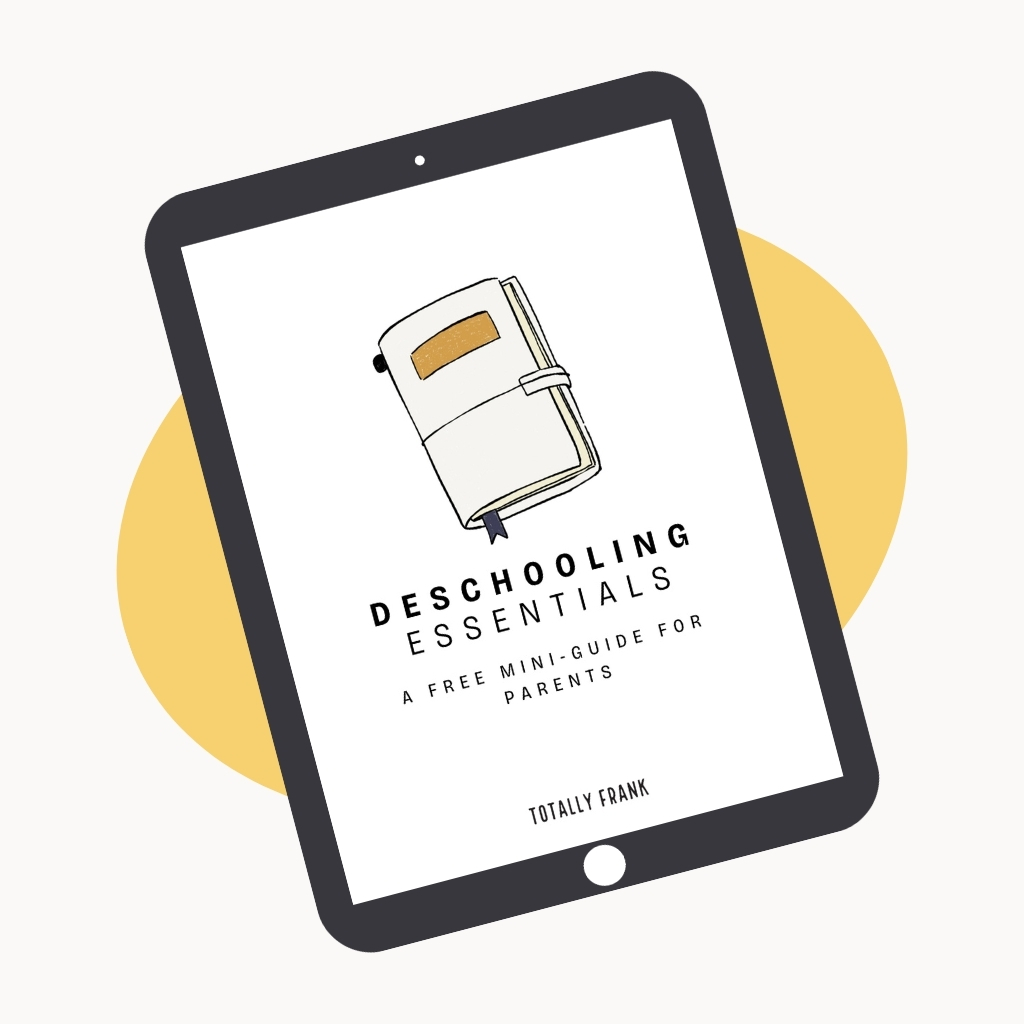
Deschooling Essentials – a free, simple guide to help you begin without overwhelm
It’s designed to help you:
👉 You can explore Deschooling Essentials if and when it feels helpful.