When school becomes too much for a neurodivergent child, the first step isn’t to push harder. It’s to understand what’s making school feel so difficult.
When a child is struggling to attend or cope with school, the behaviour we see is often only part of the picture.
School refusal, school-can’t and school distress can sit alongside sensory overwhelm, anxiety, burnout, demands, masking and a growing mismatch between what school requires and what a child has the capacity to manage.
Here you’ll find practical, compassionate support to help you understand what may be happening, reduce unnecessary pressure, and work out what your child needs before deciding what comes next.
Start wherever feels most helpful right now.
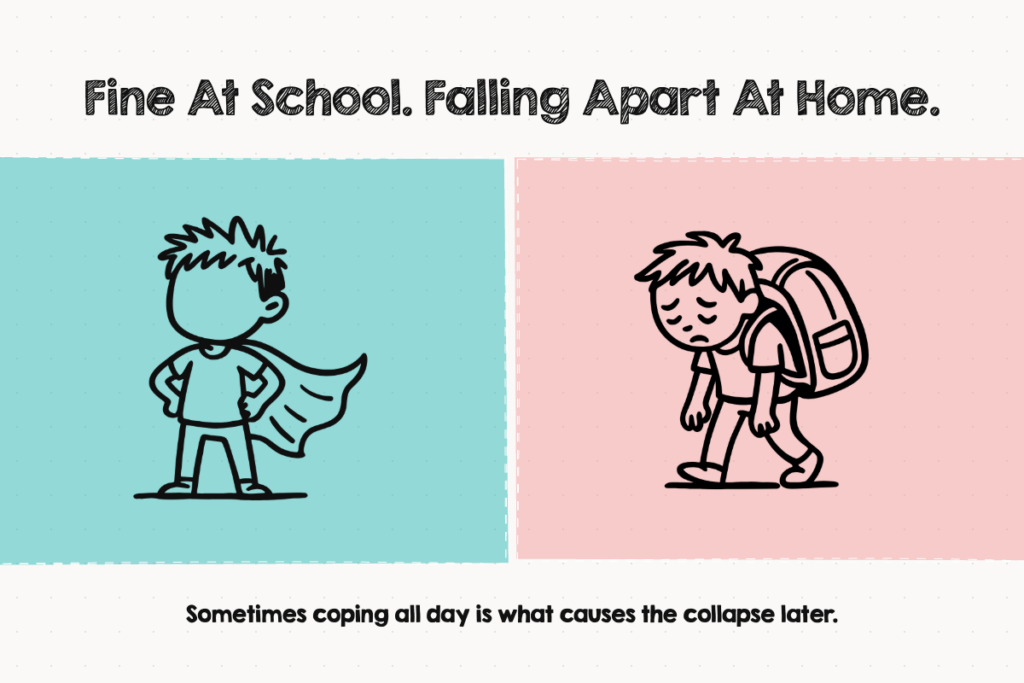
Why Your Child Hates School Suddenly (And What It Can Mean)
Sometimes school struggles seem to appear overnight. When a child suddenly hates school, it’s often a sign their nervous system has moved from coping to overwhelm.
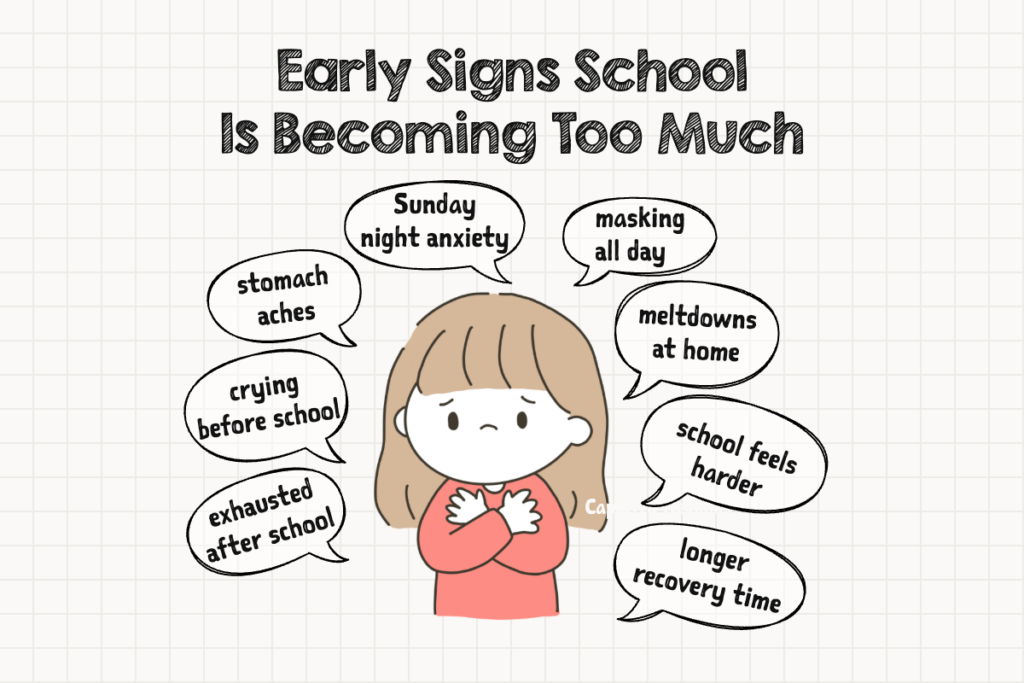
Early Signs Your Child Is Struggling in School
School distress often begins quietly. Anxiety, stomach aches, meltdowns or exhaustion can be early signs the school environment is becoming too overwhelming for a child’s nervous system.
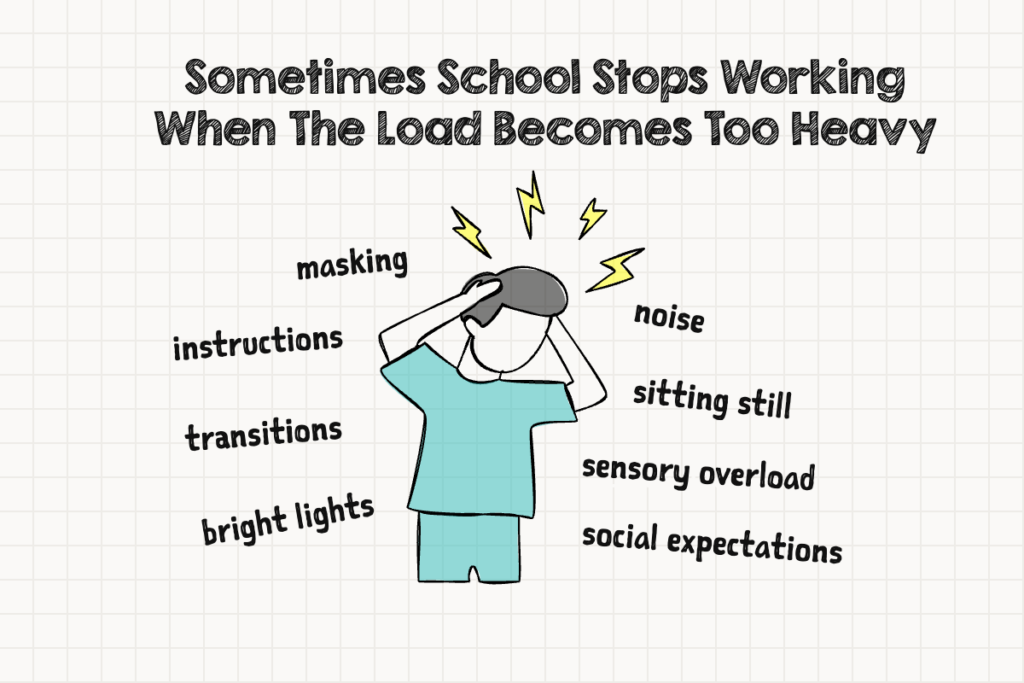
Why School Stops Working for Neurodivergent Kids
Sometimes a child who once coped at school suddenly can’t anymore. When school stops working, it’s often a sign that overwhelm, masking, or unmet needs have reached a breaking point.
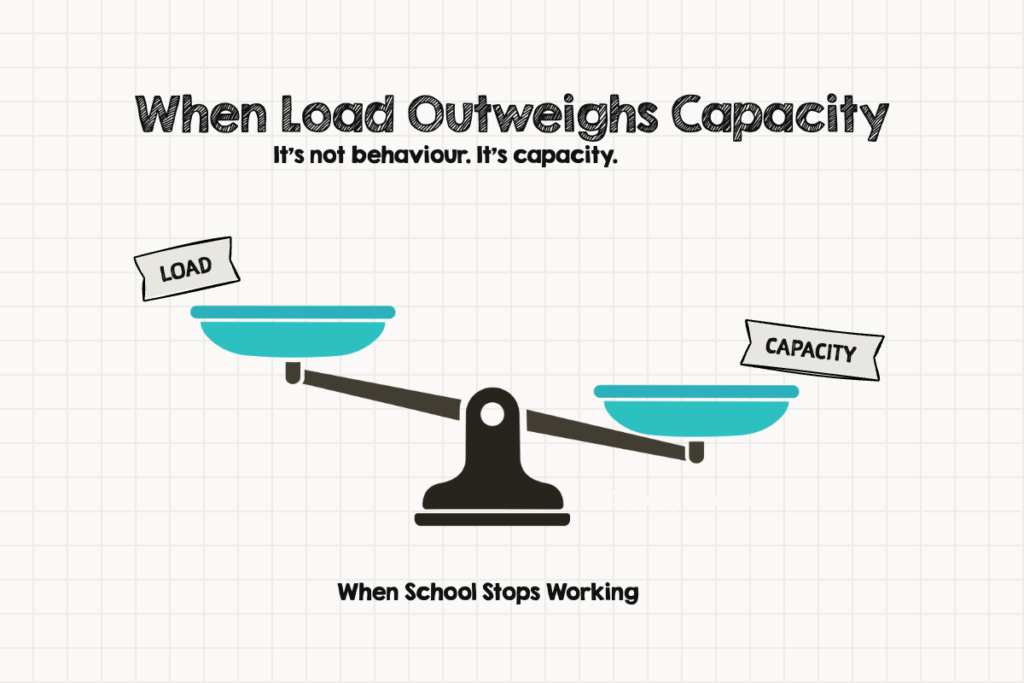
Neurodivergent Burnout in Kids: Anxiety, Overload, and What Helps
Many neurodivergent kids push themselves to cope at school for years. Burnout, anxiety and nervous system overload often appear when that coping finally becomes too much.
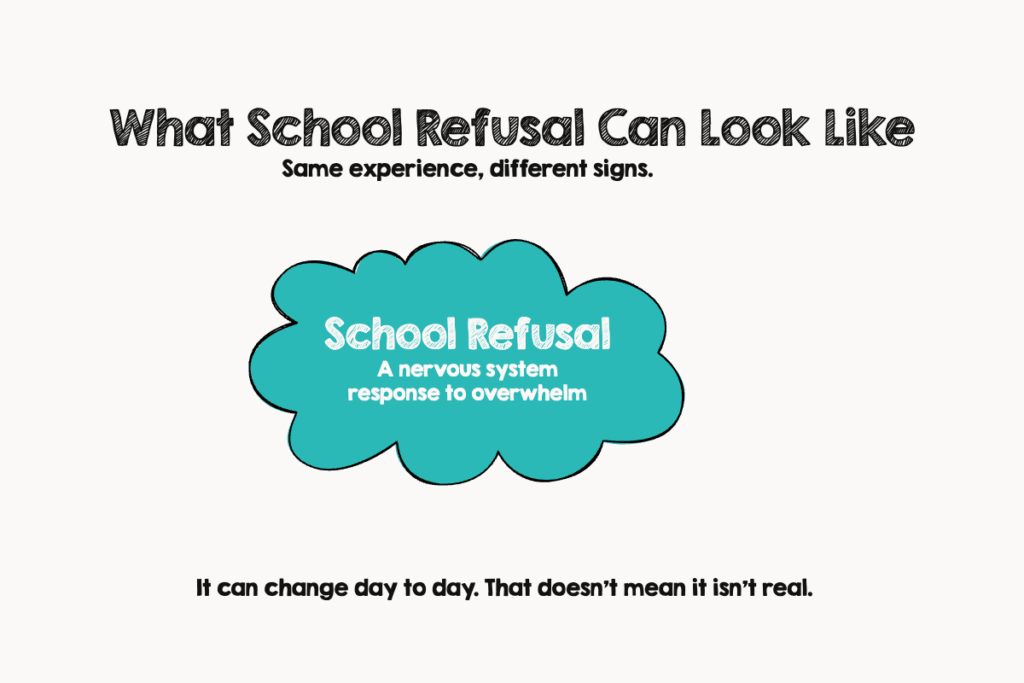
What School Refusal Really Is (And Why It Happens)
School refusal is rarely about defiance. For many children it’s a nervous system response to overwhelm, anxiety, or an environment that no longer feels emotionally safe.
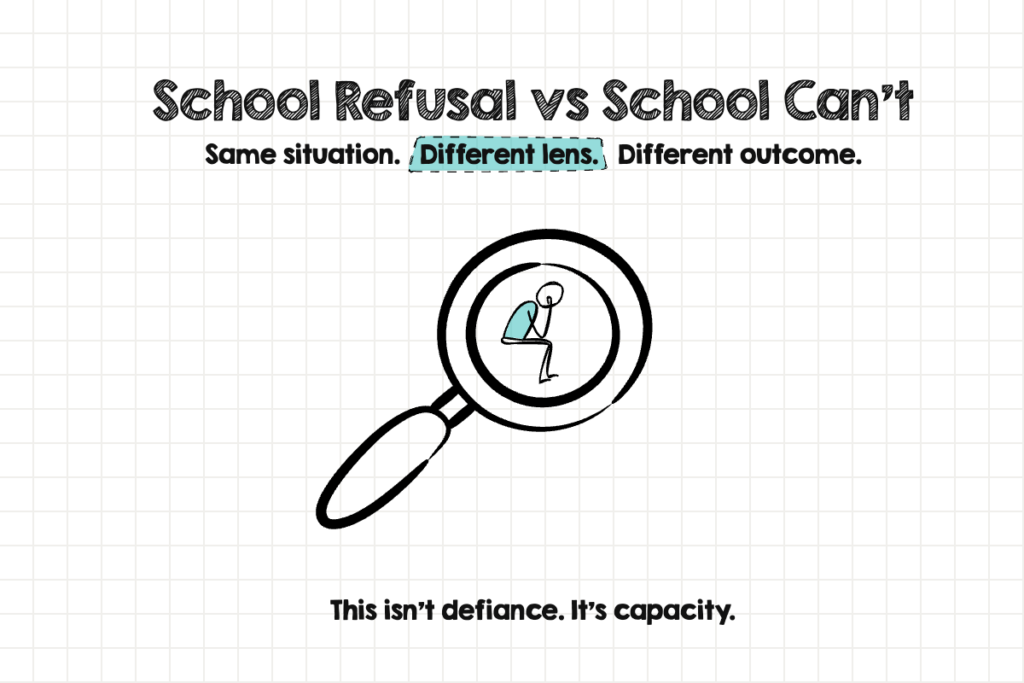
School Refusal vs School-Can’t (And Why It Matters)
Some children won’t go to school. Others truly can’t. Understanding the difference between school refusal and school-can’t can completely change how parents and schools respond.
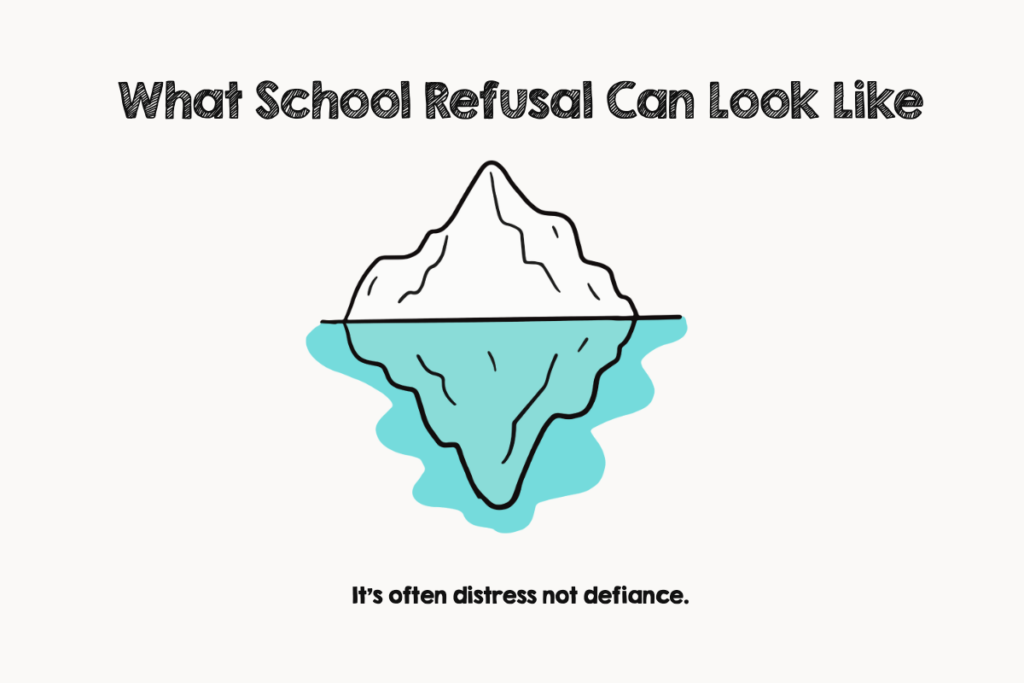
When Your Child Refuses To Go To School: What It Means
When a child refuses school, it can leave parents feeling desperate and confused. Understanding what’s happening underneath the refusal is the first step toward helping.
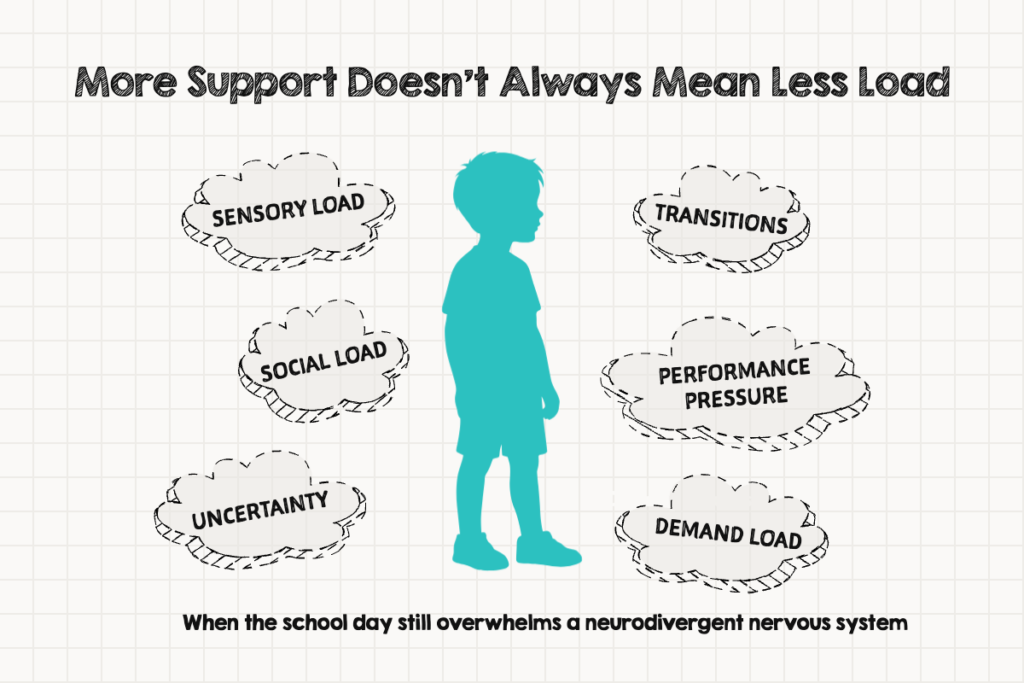
Why School Support Doesn’t Always Help Neurodivergent Kids
Schools often respond to distress by adding more support or pressure. But when a child’s nervous system is overwhelmed, more intervention inside the same environment doesn’t always help.
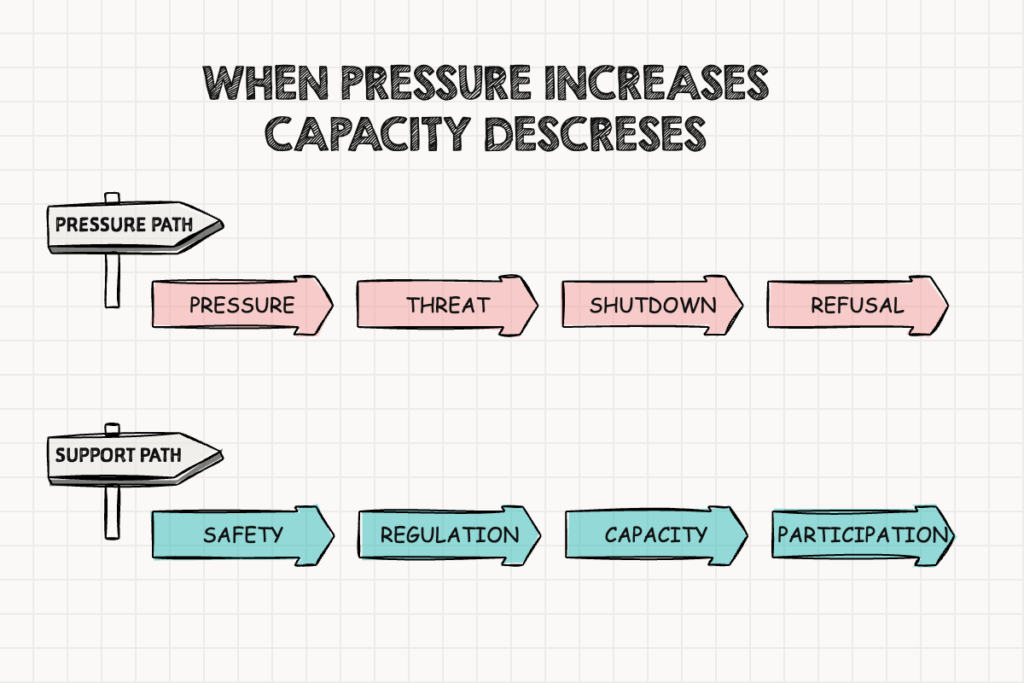
What Not To Do When Your Child Is Experiencing School Distress
When school distress escalates, many well-intentioned strategies can make things worse. Understanding what not to do can help protect your child’s nervous system and your relationship.